Translate Stamps and Seals: What to Include and What Never to Copy
Introduction If you are submitting a birth certificate, court order, diploma, police certificate, company extract, or visa document, one small detail can create an outsized problem: the stamps and seals. Many people focus on the main body text and forget the inked marks, embossed impressions, registry stamps, or receiving seals around the edges. But if […]
Clear Scan for Translation: The 5-Minute Fix That Speeds Up Translation
Why scan quality changes translation turnaround Translation is not just about reading words. Official documents often include: stamps seals signatures handwritten notes marginal notes issue numbers dates page references boxes, tables, and formatting cues If any of those details are faint, cut off, or hidden by glare, the translator cannot safely guess. A professional team […]
Why Translation Takes Longer: What Usually Slows Certified Translation Down
Introduction People often assume a certified translation delay means the job is large. In reality, that is only part of the story. A one-page certificate can move quickly when the scan is clear, the document is complete, and the language pair is common. A short file can also stall if the image is blurry, a […]
Page Count Myths: How Translation Companies Usually Count “A Page”
Page Count Myths: How Translation Companies Usually Count “A Page” If you have ever looked at a quote and thought, “But this is only one sheet of paper,” you are not alone. One of the biggest misunderstandings in certified translation is that a physical sheet and a billable page are always the same thing. They […]
Fast Translation Quote Tips: 8 Details to Send With Your Scan
Getting a translation quote should be simple. But in urgent cases, the biggest delay is rarely the translation itself; it is often due to missing information. A clear scan with the right context allows a translation team to quickly provide three key pieces of information: the price, the turnaround time, and the correct certification level. […]
Translation Pricing UK: Why Two Similar Documents Can Cost Different Amounts
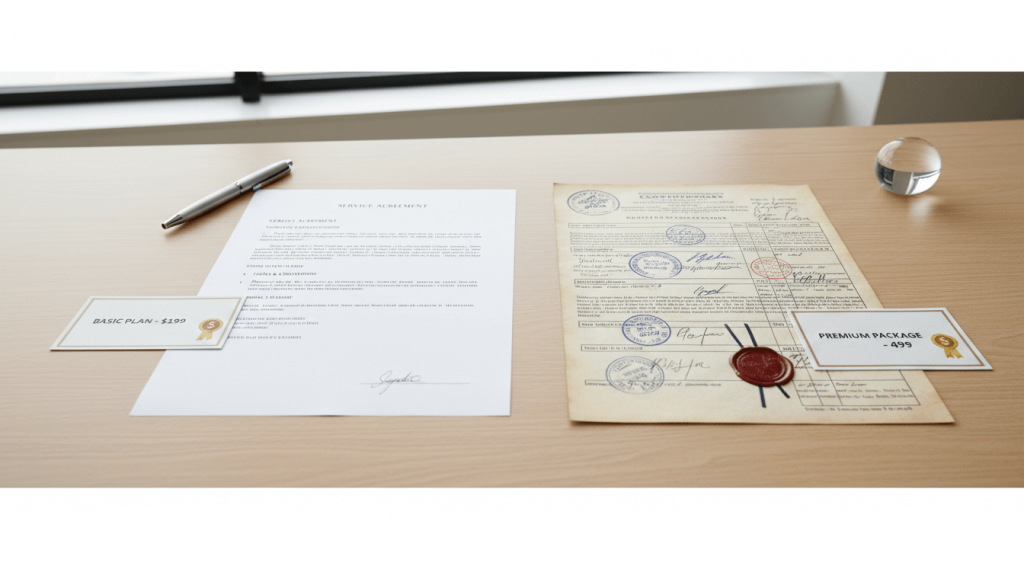
Translation pricing UK explained in plain English: two documents that look almost identical on screen can create very different amounts of work behind the scenes. One may be a clean, typed certificate that moves quickly from translation to checking to certification. The other may have stamps, handwritten notes, poor scan quality, awkward formatting, and a […]
Wet Signatures on Certified Translations: Do You Need Ink in 2026?
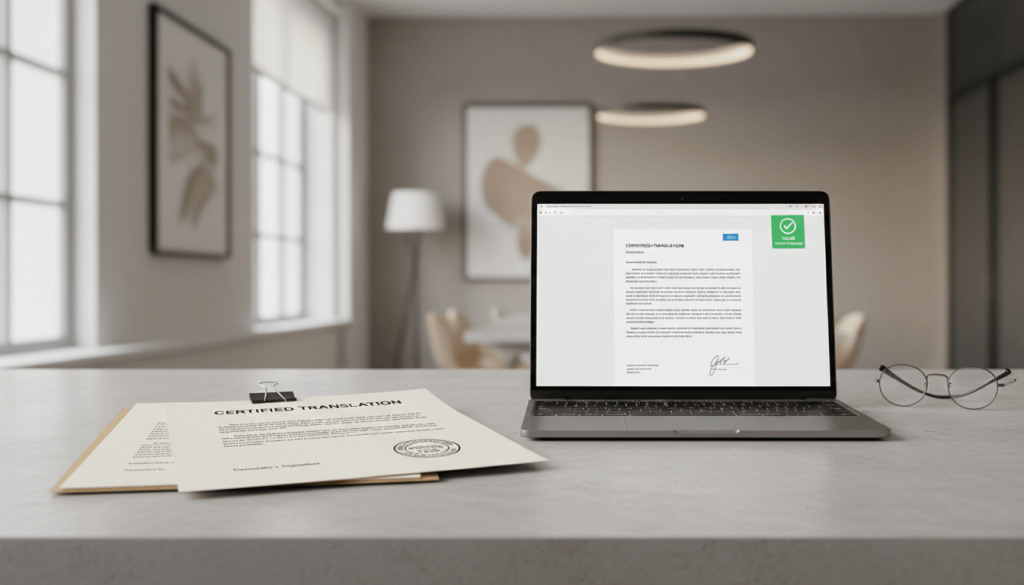
If you have been told that every certified translation must carry a wet ink signature, you are hearing an outdated half-truth. If you have also been told that a PDF is always enough, that can be just as risky. The real answer in 2026 is simpler than the online confusion makes it sound: match the […]
Digital Certified Translations (PDF): Acceptance, Risks and Best Practice

A digital certified translation is often the fastest and most practical option in the UK. For many online and email-based submissions, a properly prepared PDF is exactly what the process is built around. But “digital” is not the same as “automatically accepted”. What matters is whether the receiving authority can verify the translation, whether the […]
Apostille and Translation: The Correct Order for Overseas Use
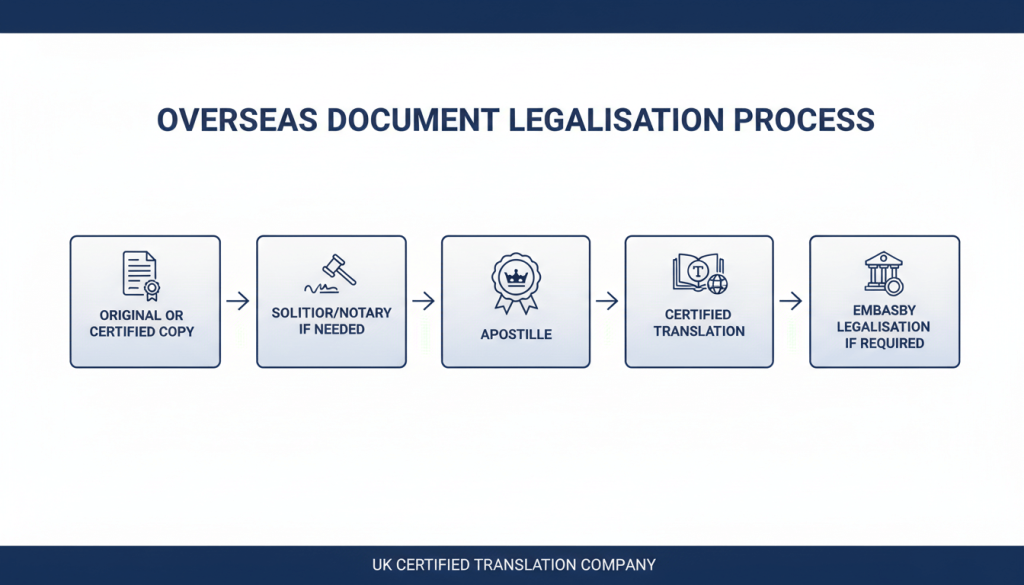
If you are trying to work out the right apostille and translation order, the most important thing to know is this: there is no single sequence that fits every country, authority, or document. For many overseas submissions, the safest route is to apostille the document first and then translate the full apostilled set. But in […]
Sworn Translation UK: When “Sworn” Is Required and Who Asks for It

If someone in the UK tells you to get a sworn translation, do not assume that “sworn” is automatically the right format. In the UK, authorities normally ask for certified translations, while sworn translations usually belong to legal systems where translators are formally appointed by a court or state authority. In practice, the real issue […]