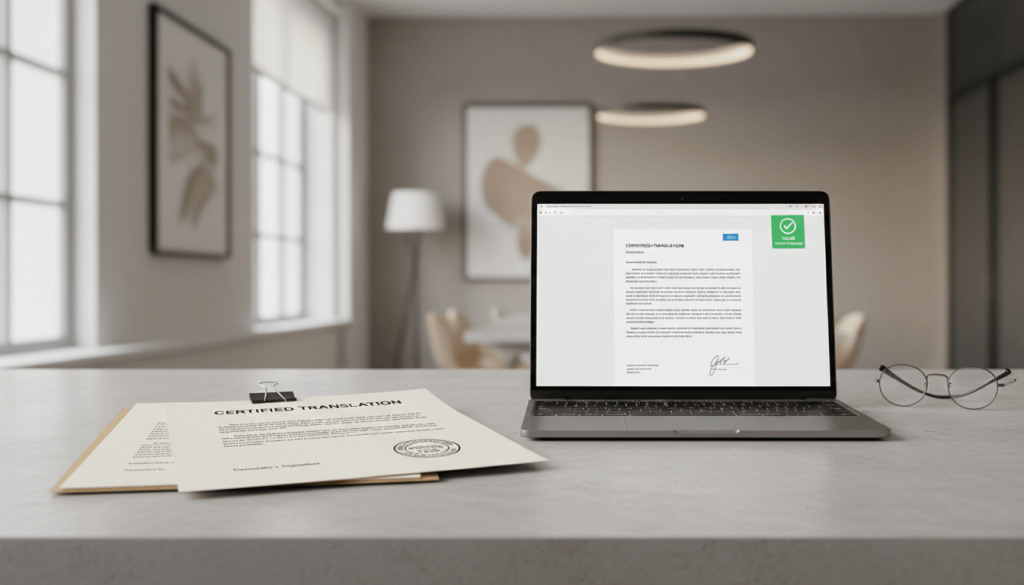
If you have been told that every certified translation must carry a wet ink signature, you are hearing an outdated half-truth. If you have also been told that a PDF is always enough, that can be just as risky.
The real answer in 2026 is simpler than the online confusion makes it sound: match the translation format to the authority, the submission method, and the legal level of the document.
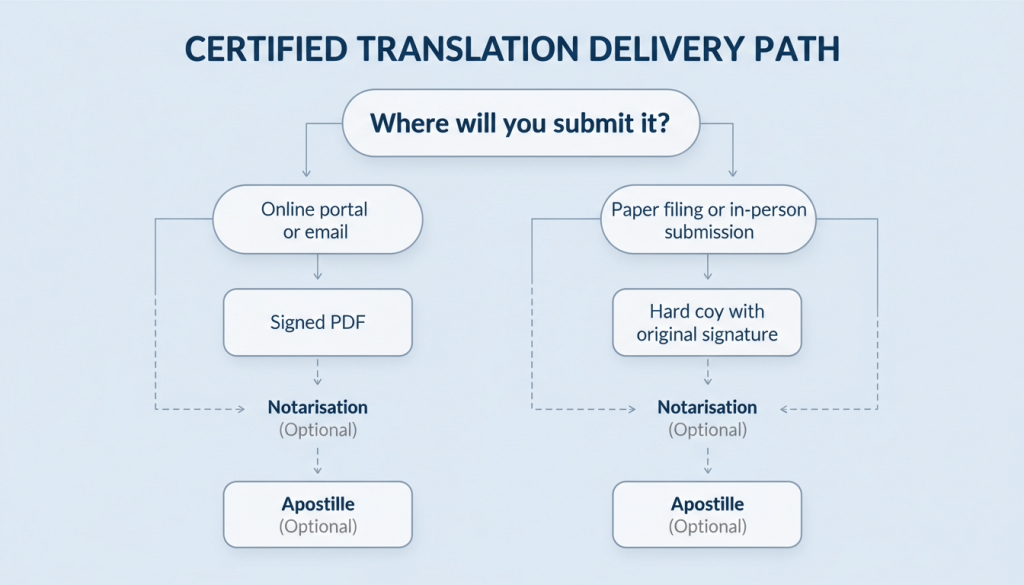
For many online submissions, a professionally prepared signed PDF can be perfectly suitable. For other cases, especially where notarisation, apostille, court filing, or overseas registry use is involved, a hard copy with an original signature may still be required or strongly preferred. The safest approach is not to ask whether wet ink is “old-fashioned”. It is to ask what the receiving body will actually accept.
At 24 Hour Translation, we help clients avoid the most common mistake in official document handling: ordering the right translation in the wrong format. A translation can be accurate, certified, and still be delayed if the receiving authority expected a printed certificate, a bound pack, a notarised signature, or a document that remains digital from start to finish.
If you need a translation for a deadline-sensitive application, the sensible move is to get the format right before you submit. Start your project with 24 Hour Translation and we will prepare the translation in the format your authority is most likely to accept.
The practical answer
You do not always need a wet signature on a certified translation in 2026.
You may need one when:
- the authority asks for an original hard copy
- the document is being filed in paper form
- a notary public or solicitor must witness or certify the translator’s signature
- the translation is going through paper apostille or legalisation steps
- the receiving body specifically mentions “wet ink”, “original signature”, “original stamped copy”, or “hard copy only”
A digitally delivered certified translation is often suitable when:
- the application is submitted online
- the receiving body accepts PDF submissions
- the certification details are complete and clear
- the authority does not insist on an original paper version
- the translation is being used for standard administrative review rather than higher-formality authentication
The key point is this: a signature requirement is not always the same thing as a wet ink requirement. Many authorities want a signed certification statement. Fewer authorities explicitly insist that the signature must be handwritten in ink on paper.
What people mean by “wet signature certified translation”
The phrase gets used loosely, which is why clients often order the wrong format.
Wet signature
A wet signature is a handwritten signature applied physically to paper using ink.
In translation work, this usually means:
- the certification statement is printed
- the translator or authorised company representative signs it by hand
- the final certified copy is posted or couriered as a physical document
Scanned signature
A scanned signature is an image of a handwritten signature placed onto a digital file.
This can look official, but on its own it is not the same thing as a secure digital signature. Some recipients accept it. Others do not. It is best treated as a presentation method, not as proof of tamper-resistance.
Digital signature
A digital signature is an electronically applied signature backed by verification technology. In the right workflow, it can help show who signed the document and whether the file has been altered after signing.
This matters especially in fully digital legalisation processes, where the authority is looking for a verifiable electronic signing chain rather than a printed page with a pasted signature image.
Printed certificate
A printed certificate is the certification statement attached to or included with the translation. It may be signed in ink, signed digitally, stamped, or prepared in both formats.
The certificate is often more important than clients realise. Rejections frequently happen not because the translation itself is wrong, but because the certificate wording, signature format, or delivery format does not match the recipient’s expectations.
What UK authorities usually care about first
Most UK-facing submission problems are not really about wet ink versus digital. They are about whether the translation can be independently trusted.
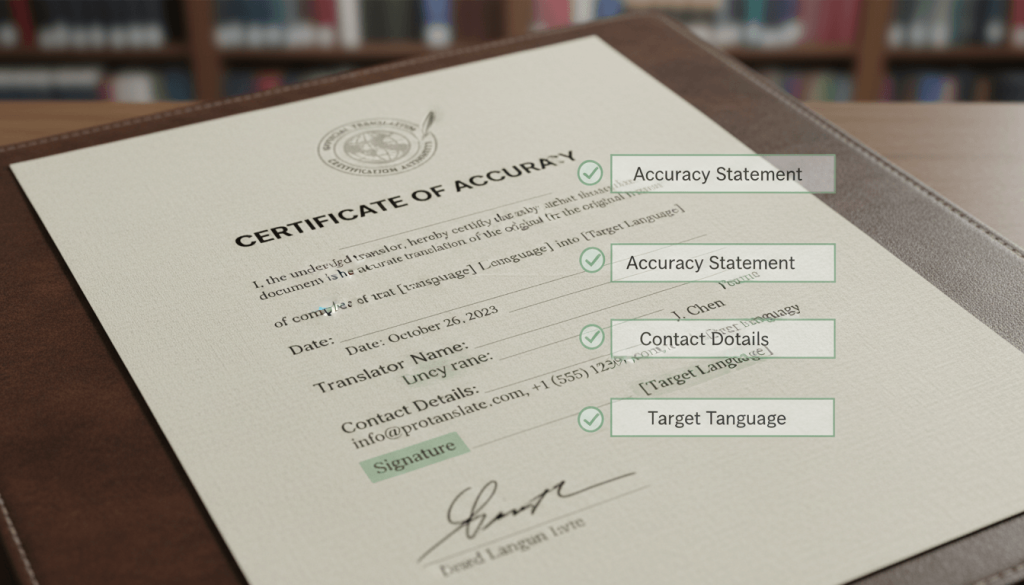
That usually comes down to whether the certified translation clearly includes:
- confirmation that it is a true and accurate translation of the original document
- the translation date
- the full name of the translator or authorised company representative
- contact details
- a signature
That is why the right question is not, “Can you put a wet signature on it?”
The better question is, “Who is asking for this, how will I submit it, and do they want a signed PDF, a posted original, notarisation, or a legalised pack?”
If you are unsure, upload your file and tell us where it is going. We will help you choose the right certification path before you pay for extras you may not need.
The biggest misconception in 2026
The biggest misconception is that one delivery format covers every official use.
It does not.
In practice, certified translations now fall into four broad lanes:
1. Online submission lane
This is where a signed PDF is often enough.
Common examples include:
- online immigration uploads
- university application portals
- employer onboarding systems
- email-based document review
- administrative pre-checks before in-person appointments
2. Hard-copy submission lane
This is where a wet-signed printed version is often safer.
Common examples include:
- paper application bundles
- physical files submitted to solicitors or registries
- document packs that must be bound together
- overseas bodies that want originals for filing or archiving
3. Notarisation lane
This is where the translator’s or translation company representative’s signature may need to be witnessed or certified by a notary public or solicitor.
In this category, the signature is not just a formality. It becomes part of the authentication chain.
4. Fully digital legalisation lane
This is where the process stays electronic from end to end.
A good example is a digital apostille workflow for eligible documents. In this lane, a simple printed copy is not a substitute for the electronic original. The integrity of the digital file matters.
This is why “just print the PDF” is sometimes good advice, and sometimes completely wrong.
When a wet signature is still the safer choice

Even in 2026, ink still matters in a number of real-world situations.
Paper-first authorities
If the receiving body works from a physical bundle, a wet-signed certified translation remains the safer option. This is especially true where documents are filed, archived, bound, stamped, or reviewed in person.
Notarised translations
Where notarisation is required, the notary is not usually certifying the translation itself. They are certifying the translator’s or authorised representative’s signature. That makes the signature format and signing sequence more important than in a standard certified translation.
Apostille and overseas legal use
When a translation must be notarised and then legalised, the paper workflow often still matters. In some cases, a solicitor or notary signature in the UK must be recognised before the apostille step can happen.
Court-sensitive document packs
Wills, powers of attorney, and other higher-formality documents should never be treated casually. Even where digital signing is legally recognised in some contexts, the receiving court, solicitor, notary, or foreign authority may still want the translation presented in a specific physical format.
Embassies, consulates, and foreign registries
Overseas bodies are often the most format-sensitive. Some accept signed PDFs. Others still want a hard copy with original ink signature, stamp, seal, binding, or notarisation.
If your translation is crossing borders, do not assume the UK’s digital convenience culture applies on the receiving side.
When a signed PDF is often enough
A digitally delivered certified translation is commonly suitable where the entire submission process is digital or where the recipient expressly accepts scanned or electronic supporting documents.
This often works well for:
- standard UK immigration uploads
- education admissions portals
- digital HR onboarding
- internal compliance reviews
- document pre-assessment before the authority requests originals
In these cases, what matters most is that the certification is complete, the PDF is clear, and the provider can be independently identified if the authority wants to verify the document.
A professionally prepared PDF is also faster, easier to store, easier to resend, and useful when the client is working across time zones or urgent deadlines.
For many clients, the best solution is not digital-only or paper-only. It is a dual-format pack: signed PDF first for speed, hard copy available when needed.
A better way to decide: the three-question test
Before ordering your translation, answer these three questions.
1. How will the document be submitted?
- Upload only
- Email only
- Portal plus later original check
- Paper filing
- In-person appointment
If the answer includes paper filing or original document inspection, hard copy becomes more important.
2. What level of formality is involved?
- Standard certified translation
- Notarised translation
- Apostille or legalisation
- Sworn or recognised overseas format
- Court or registry submission
The higher the formality, the less sensible it is to rely on assumptions about digital acceptance.
3. What exact wording does the recipient use?
Watch for phrases such as:
- original hard copy
- original signature
- wet ink signature
- stamped original
- notarised
- apostilled
- legalised
- bound translation
- electronically signed PDF
These phrases tell you more than generic online advice ever will.
Real-world examples
Example 1: UK visa upload with no paper filing stage
A client needs a birth certificate and bank statement translated for a portal upload. The authority wants the translation to be signed and verifiable, but there is no instruction requiring an original paper bundle.
Best fit: a properly certified signed PDF, with hard copy available if requested later.
Example 2: Spanish property paperwork through a solicitor and notary
A client needs a power of attorney translated for overseas use. The receiving side requires notarisation and legalisation.
Best fit: not just a standard certified PDF. The signing sequence, notarisation step, and legalisation route all matter. A wet-signed or specifically notarised pack is far more likely to be required.
Example 3: University application portal followed by enrolment check
A student uploads translated academic records online, but the university later requests originals at registration.
Best fit: digital delivery first for the application deadline, plus optional posted hard copy so the student is not scrambling later.
Example 4: Employer asks for translated ID and proof of address
The company reviews the files digitally and only needs records for onboarding.
Best fit: a clean certified PDF is often the most practical choice.
The overlooked risk: rejection caused by format, not translation quality
Many people focus entirely on linguistic accuracy and forget the submission mechanics.
That is a mistake.
A translation can be perfectly accurate and still be rejected because:
- the certificate was not signed
- the wrong person signed it
- the receiving body wanted a hard copy original
- the PDF looked editable or insecure
- the document needed notarisation, not just certification
- the file had to remain electronic for digital legalisation purposes
- the translation was not clearly linked to the source document
This is one reason clients come to 24 Hour Translation after a first rejection elsewhere. The language may not have been the issue at all. The packaging was.
What to order if you want the lowest-risk option
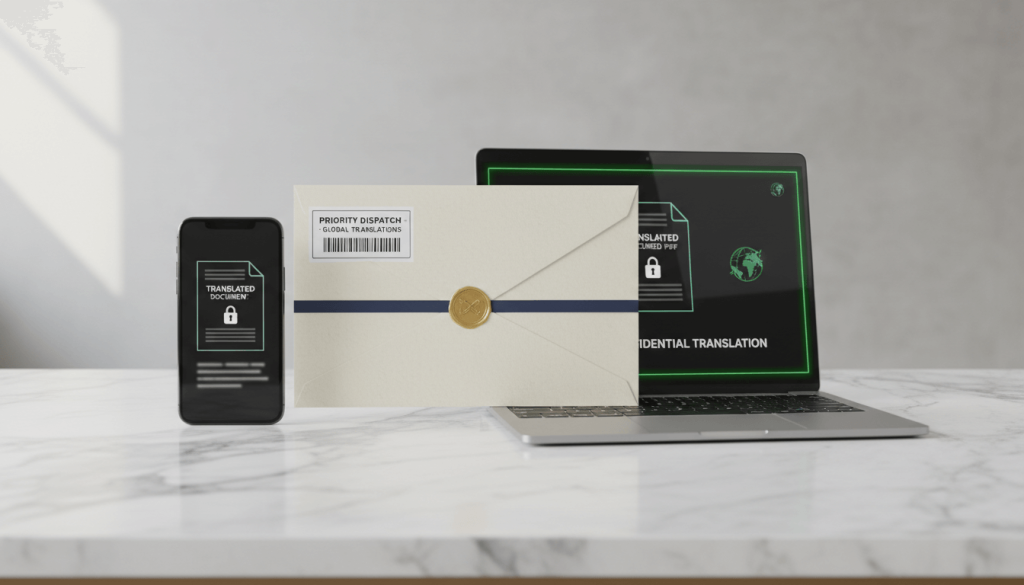
If acceptance matters more than shaving a few pounds off the job, the lowest-risk order is usually this:
- a fully certified signed PDF for immediate use
- an optional hard copy with original signature for paper-first recipients
- notarisation only where the receiving authority actually asks for it
- apostille or legalisation only where the country and authority require it
This avoids two expensive problems:
- paying for high-formality extras you do not need
- missing a deadline because you ordered a format the authority would not accept
A useful rule of thumb is this: buy for the highest realistic requirement in your workflow, not the lowest possible one.
If there is any chance the recipient will later ask for a physical original, ordering the hard copy at the start is usually cheaper than rushing it after submission.
What a reliable certified translation package should include
Whether the document is digital or physical, your provider should be able to prepare a pack that is clearly submission-ready.
A strong certified translation package typically includes:
- the translated document, fully completed and formatted clearly
- a certification statement confirming accuracy
- translator or authorised company details
- signature and date
- clear identification of source and target languages
- delivery format matched to the authority’s process
- optional hard copy, notarisation, or legalisation support where relevant
For higher-risk submissions, it also helps when the provider understands the difference between:
- standard certification
- notarisation
- apostille/legalisation
- overseas sworn translation requirements
- digital-only authentication workflows
Why this matters for urgent jobs
Urgent applications are where format mistakes hurt most.
A fast translation is not truly fast if you then lose three days discovering the authority wanted a wet-signed original or a notarised version.
24 Hour Translation is built for deadline-sensitive work. Our team handles certified translations for immigration, legal, academic, and corporate use, with digital delivery included and hard copies available where required. If your file may need a physical certificate, tell us at the quoting stage and we will build that into the plan from the start.
That is the difference between fast delivery and useful delivery.
Do you need ink in 2026?
Sometimes yes. Often no. Always check the use case.
That is the honest answer.
A wet signature still matters when the authority wants an original physical document, when a notary or solicitor must certify the signature, or when the translation is entering a paper-based legalisation or registry workflow.
A digitally delivered certified translation is often entirely suitable when the submission route is online and the receiving body accepts signed PDFs or digital supporting documents.
The safest strategy is not to pick a side in the wet-ink-versus-digital argument. It is to make the format fit the authority.
If you want a translation that is prepared properly the first time, upload your file to 24 Hour Translation and tell us where it is going. We will help you choose the right certification path, the right delivery format, and the right level of authentication without unnecessary extras.
Frequently asked questions
Does a wet signature certified translation mean every authority wants ink on paper?
No. A wet signature certified translation is still required in some cases, but many authorities only require a signed, verifiable certified translation and will accept a digital PDF when their process is online.
Will UK immigration accept a digital certified translation?
It often can, provided the translation contains the required certification details and matches the way the documents are being submitted. The important point is that immigration guidance asks for a signed translation, but the receiving process may still be digital.
Is a scanned signature the same as a digital signature on a certified translation?
No. A scanned signature is an image of a signature placed on a document. A digital signature is electronically applied and can offer better verification and tamper evidence. Some authorities treat these very differently.
Should I order a hard copy certified translation even if I am submitting online?
If there is any chance the authority, university, solicitor, embassy, or overseas registry will later ask to inspect originals, ordering the hard copy from the start is often the safer option.
Do notarised translations need wet signatures?
In many practical workflows, yes, because the notary is dealing with the authenticity of the translator’s or company representative’s signature. Where a digital legalisation route is being used, the exact signing method must still match the legalisation requirements.
Can I print a digitally signed certified translation and use that as the original?
Not always. In some workflows a printout is acceptable as a practical copy. In others, especially where the document’s validity depends on the digital signature itself, the original must remain electronic.