Utility Bill Translation UK: Which Sections Matter for Proof of Address
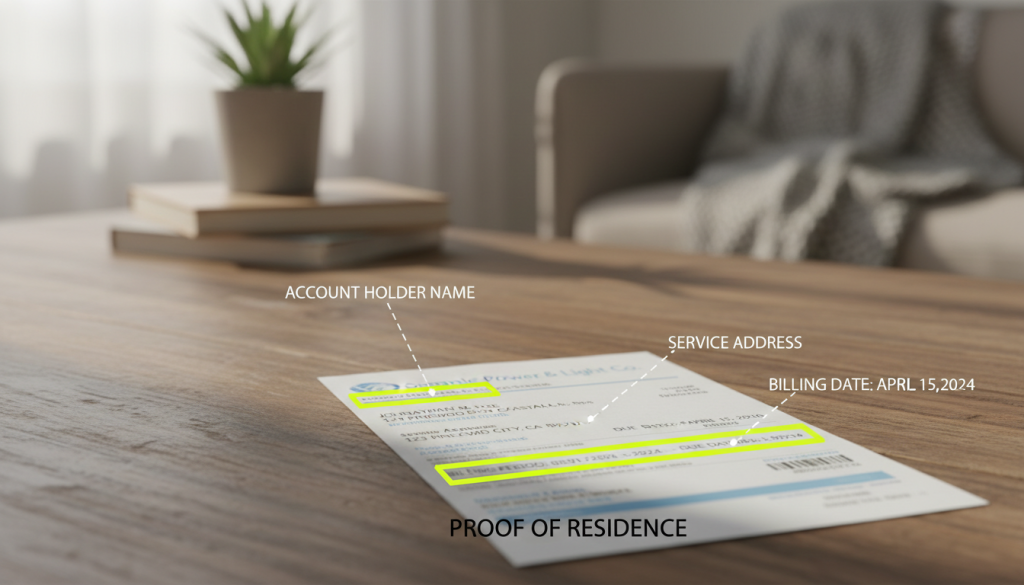
A utility bill can look simple, but when it is being used as proof of address, small details matter. Reviewers usually look first for the account holder’s name, the residential address, and a recent date. If the bill is not in English or Welsh, UK-facing applications and checks commonly require a full certified translation, and the translation must include the details needed to verify who produced it. (GOV.UK)
That is why a good utility bill translation is not just about converting words. It is about preserving the document’s evidence value. The layout, labels, dates, address lines, and reference numbers all help show that the bill genuinely belongs to the person named on it and relates to the address being claimed.
If your document is being prepared for a visa file, banking checks, tenancy paperwork, employer onboarding, or another official submission, the safest approach is to translate the bill in a way that keeps every important proof-of-address element visible and easy to verify. For wider support, 24 Hour Translation already offers online certified translation, broader certified translation services, and a full overview of documents we translate.
The short answer: which sections matter most?
For most proof-of-address uses, these are the sections that matter most on a utility bill:
- account holder name
- full service address
- issue date
- billing period
- supplier name
- account number or statement number
- page numbers or continuation references
- notes, stamps, barcodes, and document labels that affect meaning
If even one of those elements is missing, mistranslated, abbreviated too aggressively, or detached from the rest of the layout, the bill becomes less useful as evidence.
Why utility bills are used for proof of address in the UK
Across UK identity and address checks, utility bills are commonly listed as acceptable proof of address, usually with a recency requirement. Government checklists and major bank guidance also focus on whether the document is addressed to the applicant, whether it shows the current address, and whether it is recent enough for the receiving organisation’s rules. (GOV.UK)
That practical reality changes how a translation should be prepared. A translation that only shows the address block but ignores the issue date, supplier, or reference details may be linguistically correct and still be poor evidence.
Which parts of a utility bill should always be translated
1. Account holder name
The name is usually the first thing checked. It should be translated or transliterated consistently with the spelling already used in the rest of the applicant’s pack, especially if the same person also appears on a passport, BRP, tenancy agreement, bank statement, or employer letter. If the bill shows two names, both should appear in the translation exactly as labelled.
What often goes wrong:
- dropping a middle name or second surname
- switching name order without explanation
- translating one joint holder but not the other
- normalising spellings so they no longer match the rest of the file
A reviewer should be able to glance from the bill to the passport and see that the same person is being identified.
2. Full address lines
For proof of address, this is the core section. Translate every address line exactly as it appears in structure and sequence. Keep flat numbers, building names, stair numbers, district names, postal codes, and province or municipality labels. Do not compress a five-line address into one neat English sentence if that removes traceable structure.
The most reliable approach is:
- keep the original line order
- transliterate location names consistently
- preserve postcode or postal code formatting
- keep labels such as “service address,” “billing address,” or “correspondence address” distinct
If the bill shows both a service address and a mailing address, both should be translated. That distinction can be the difference between acceptance and a follow-up query.
3. Issue date and billing period
A bill is not strong proof of address just because it names an address. It also has to be recent enough for the receiving body’s rules. Many UK checklists and bank requirements expect utility bills to be recent, often within the last 3 or 4 months, and some evidence routes also make clear that the document must be dated and show the applicant’s name. (GOV.UK)
This means the translation should clearly show:
- issue date
- billing period or statement period
- due date if shown
- any “as at” or “closing date” wording
Do not hide these dates in running text. Make them easy to locate.
4. Supplier name and document identity
The utility provider matters because it helps establish that the document is a real bill from a real issuer rather than an isolated address printout. Translate or preserve:
- supplier name
- document title such as “electricity bill,” “water invoice,” or “account statement”
- customer service or issuer footer if it helps identify the document
- logo description only where necessary for clarity
If the document title is ambiguous, the translation should remove doubt. A reviewer should not have to guess whether the document is a utility bill, reminder notice, balance summary, or customer portal screen.
5. Account number, customer number, and statement number
These details are often overlooked, but they help authenticate the document and tie pages together. Include:
- account number
- customer ID
- contract number
- invoice number
- statement number
- meter point or service reference where shown
These references matter most when:
- the bill has more than one page
- the address is shown on one page and the billing details on another
- the reviewer needs to see that all pages belong to the same bill
A translation that omits statement numbers can make a multi-page bill look incomplete.
6. Page headers, footers, and continuation markers
If page 1 shows the name and address, but page 2 contains the billing period, issuer details, or reference number, both pages matter. Major bank upload guidance also stresses that the relevant page should show the name and current address and that the whole document should be visible. That is a strong reason not to crop, isolate, or partially translate supporting pages when the page relationship helps prove authenticity. (HSBC UK)
Translate page markers such as:
- page 1 of 2
- continued overleaf
- account summary
- payment slip detached below
- duplicate / copy / online statement
These labels often look minor until someone questions whether the file is complete.
7. Notes, warnings, and stamps
Anything that changes meaning should be translated. That includes:
- “copy” or “duplicate” markings
- overdue warnings
- disconnection notices
- payment status labels
- barcoded reference notes
- handwritten office notes
- portal-generated disclaimers
- certification stamps or annotations from another authority
If a note is illegible, say so clearly. Never guess.
What can be summarised, and what should stay full?
For proof-of-address use, the safest rule is simple: do not cherry-pick only the attractive parts. Translate in full:
- all identity and address sections
- document title
- issue date and billing period
- issuer name
- account and statement references
- page markers
- notes that affect status or meaning
Usually include as well:
- amount due or balance
- service type
- due date
- tariff or plan name
- meter or property reference
- payment status
Items that are often lower priority, but still should not be silently removed without a reason:
- advertising messages
- generic energy-saving tips
- promotional banners
- repeated customer service boilerplate
A strong official translation is not a selective extract unless the receiving body has explicitly said an extract is acceptable.
The four details that decide whether the bill works as proof of address
The name must match the person in the file
If the passport says “Mohamed Ali Hassan” and the translated bill says “Mohammed A. Hassan,” you may have created a mismatch where none existed. Keep spellings stable across all documents in the pack.
The address must be complete
Flat number, building name, street, district, city, and postcode should all appear if they exist in the original. A shortened address may still look readable, but it can weaken matching against other documents.
The date must be recent
A perfect translation of an old bill may still fail the address-check stage. Translate the date clearly and check the receiving body’s recency rule before ordering.
The bill must still look like a bill
A translation should preserve structure. If all headings, labels, references, and page logic disappear, the reviewer is left with plain text instead of documentary evidence.
Common reasons utility bill translations get rejected or questioned
Only the address box was translated
This is one of the most common mistakes. The reviewer can see the claimed address, but not the issue date, issuer, billing period, or customer reference.
The wrong address was translated
Some bills show both service address and correspondence address. If the translation merges them or chooses one without the label, confusion follows.
Dates were converted carelessly
Day-month-year and month-day-year confusion is still common. A bill that appears to be recent can suddenly look out of date if the date format is handled badly.
The document was cropped
Banks and document reviewers often want the relevant page to be fully visible. Screenshots, cropped portal views, or partial PDFs can create avoidable doubt. (HSBC UK)
The translation certificate was incomplete
UK guidance for translated documents commonly expects a certification statement confirming accuracy, together with the date, translator details, and, in some routes, a signature so the translation can be independently verified. (GOV.UK)
The bill type was weak to begin with
Many UK checklists accept gas, electricity, water, and landline phone bills, but mobile phone bills are often excluded. That means a perfect translation may still be the wrong document choice for the receiving body. (GOV.UK)
Are online bills and downloaded PDFs acceptable?
Often yes, but only if the receiving body accepts them and the file clearly shows the same proof-of-address essentials as a paper bill.
Some bank guidance explicitly accepts online bills, but still requires that the document be addressed to the applicant, dated within the permitted window, and uploaded so the whole document is visible. (HSBC UK)
That means a good digital submission should show:
- the full page, not a clipped screenshot
- the account holder’s name
- the current address
- the bill date
- the provider identity
- any page numbering or reference details
A PDF export from the provider portal is usually stronger than a mobile screenshot.
What a proper certified utility bill translation should include
If the original bill is not in English or Welsh, the translation should be prepared as a full certified translation suitable for official use. UK guidance for translated documents commonly requires:
- confirmation that the translation is accurate
- the translation date
- the translator’s full name
- contact details
- a signature where the receiving route asks for one or where the translation must be independently verifiable (GOV.UK)
In practice, that means the translation should not just be linguistically accurate. It should also look professional, traceable, and submission-ready.
If you are unsure whether a standard certified translation is enough, or whether the destination authority may want notarisation or another extra step, check the destination requirement before submitting. You can also start with 24 Hour Translation’s services page or contact page and state exactly where the bill will be used.
A practical way to think about it: the reviewer’s 10-second check
In the first 10 seconds, a reviewer wants to answer five questions:
- Whose bill is this?
- What address does it show?
- How recent is it?
- Who issued it?
- Is this a complete, reliable translation of the document?
If your translation makes those five answers easy to spot, you are doing the job properly.
A smarter translation approach for proof-of-address packs
Utility bills are often not submitted alone. They are usually part of a wider pack that may include a passport, tenancy agreement, bank statement, payslip, visa paperwork, or employer confirmation.
That is why consistency matters:
- names should match across all documents
- address lines should stay stable across all translations
- transliteration choices should not change from one document to another
- dates should follow one clear format throughout the pack
If your utility bill is only one document in a larger submission, it helps to review it alongside the rest of the file. For related support, point readers to documents we translate and languages we cover.
Before you send your utility bill for translation
Use this quick checklist:
- Is the bill recent enough for the organisation asking for it?
- Does it show the account holder’s full name?
- Does it show the full address, not just part of it?
- Is the bill type acceptable for that organisation?
- Are all pages included?
- Are both service and correspondence addresses visible if both appear?
- Is the scan clear and uncropped?
- Are statement numbers, billing period, and issue date readable?
- Does the provider name appear clearly?
- Do you know whether you need a certified translation, not just a plain translation?
If the answer to any of those is no, fix that before ordering. It is faster and cheaper than correcting a weak submission later.
When speed matters
Proof-of-address requests often come late in the process. A landlord asks for it after reference checks begin. A bank asks for one more document before activating the account. An immigration file is ready except for one non-English bill.
In those cases, speed matters, but accuracy matters more. A rushed translation that drops the billing period, misses a second address block, or omits the certification statement can cost more time than it saves.
The best next step is simple: upload the full bill, mention where it will be used, and ask for a certified translation prepared for official submission. If the bill is part of a larger pack, send the related documents at the same time so names and address lines stay consistent.
Need a utility bill translation prepared properly?
If your bill is being used for proof of address, do not translate only the obvious lines and hope the rest will be ignored. A strong submission keeps the evidence intact.
Start with online certified translation, or contact 24 Hour Translation with the bill and the destination requirement. If you already know you will be submitting several documents together, review the wider certified translation services page first so the whole pack can be prepared consistently.
Frequently asked questions
Do I need a certified utility bill translation in the UK?
If the bill is not in English or Welsh and it is being used in an official UK-facing process, a certified translation is commonly required. The translation should clearly identify the translator and confirm accuracy. (GOV.UK)
Which sections of a utility bill matter most for proof of address?
The key sections are the account holder name, full address, issue date, billing period, provider name, and account or statement reference. Those are the details that help reviewers confirm who the bill belongs to, where it relates to, and whether it is recent enough.
Can I translate only the address section of my utility bill?
That is usually a bad idea unless the receiving body has specifically asked for an extract. For proof-of-address use, the name, address, date, issuer, and reference details work together. Removing the surrounding context weakens the document.
Are online utility bills acceptable for proof of address?
Often yes, provided the organisation accepts online statements and the file clearly shows the applicant’s name, current address, date, and full relevant page. Some UK bank guidance expressly accepts online bills under those conditions. (HSBC UK)
Are mobile phone bills accepted as proof of address?
Often no. Many UK checklists prefer gas, electricity, water, and landline telephone bills, and some explicitly exclude mobile phone bills. Always check the destination requirement before using one. (GOV.UK)
What if my utility bill shows two names or two addresses?
Translate both exactly as labelled. Do not merge them. If the bill has a service address and a correspondence address, or two account holders, that distinction should remain visible in the translation.