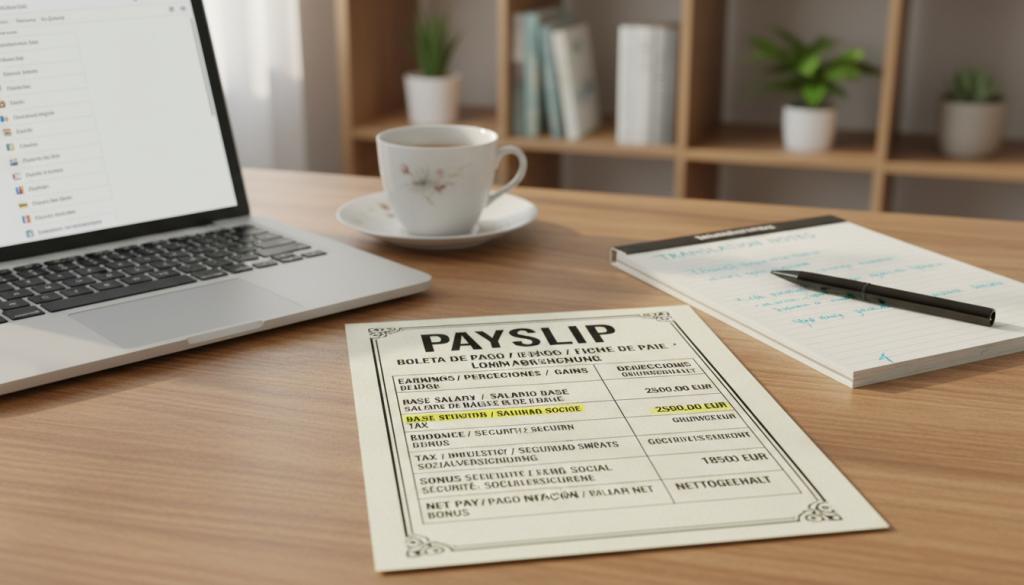
A payslip looks simple until it needs to be translated for an official review, a financial assessment, an employer onboarding file, or a document pack where every number and label must make sense at a glance. That is where consistency matters. A good payslip translation does not just turn one language into another. It preserves payroll meaning, keeps repeated terms stable across every month, and makes sure the translated document still reads like a real payroll record rather than a rewritten summary.
If your payslips are being prepared for formal submission, it is worth using a service built for certified translation services rather than treating them like ordinary business text. Payroll documents are dense, repetitive, and easy to distort when deductions, allowances, date formats, and totals are handled loosely.
Why payslip translations are often rejected, questioned, or delayed
Most problems do not come from one dramatic error. They come from small inconsistencies that add up.
A translator might render the same deduction three different ways across six monthly payslips. A pay period label may be translated as a payment date. A total may still be numerically correct, but the layout may make it look as if the deduction belongs to the wrong row. A code may be expanded into a meaning that was never written in the source. None of these issues changes the document completely, but each one makes the file harder to trust.
The safest approach is simple:
- keep the payroll structure intact
- translate labels consistently
- leave figures, codes, and identifiers exactly as they appear
- check that totals still read logically after formatting
- keep the same term choices across every payslip in the set
That is the core of any strong payslip translation guide.
The rule that prevents most payroll translation mistakes
Translate the wording. Do not rewrite the payroll logic.
That means the translation should explain what each label means without changing how the original payroll system presents the information. The document should still show the same rows, the same order, the same amounts, and the same internal relationships between earnings, deductions, and net pay.
What should usually be translated
- section headings
- row labels
- notes printed on the payslip
- attendance labels
- earnings labels
- deduction labels
- employer messages or payroll comments
What should usually stay exactly the same
- employee number
- employer reference
- tax code
- payroll number
- account-ending digits
- document numbers
- payment amounts
- year-to-date figures
- dates as shown in the source, unless a note is needed for clarity
- currency symbols and currency codes
What may need a light explanation, not a rewrite
- abbreviations that are unclear outside the source country
- payroll acronyms
- local contribution codes
- short system labels with no direct one-word equivalent
A reliable translator knows the difference between translating a label and inventing an interpretation.
The best way to keep payroll terms consistent across multiple payslips
Before translating line by line, create a term map.
This is where many weak translations fail. They start with the first page and make wording choices as they go. A stronger workflow builds a mini glossary first, especially when the file set contains multiple months.
A simple payslip term map
| Source term type | Best handling approach | Why it works |
|---|---|---|
| Basic salary / base pay | Pick one translation and keep it across every page | Prevents drift between months |
| Overtime | Use one stable equivalent | Keeps payroll categories comparable |
| Bonus / commission | Preserve the distinction | These are not the same thing |
| Tax / income tax | Keep separate from social contributions | Prevents legal and financial confusion |
| Pension | Keep distinct from savings or insurance deductions | Avoids category blending |
| Net pay | Use one fixed translation everywhere | This is one of the most checked fields |
| Year to date | Translate consistently or explain once | Repeating figures need matching labels |
A payslip translation guide is strongest when it treats recurring payroll language as a controlled vocabulary, not free prose.
How to translate deductions terms without blurring meaning
Deductions are where precision matters most. Many of the terms look similar. They are not.
For example, a deduction may be statutory, voluntary, one-off, or employer-specific. If several different items are all translated as a generic word such as “deduction,” the translated payslip becomes less useful because the reader loses the distinction between tax, pension, loan repayments, benefit adjustments, and internal payroll corrections.
Keep these categories separate
Earnings
These are additions to pay, such as:
- basic pay
- overtime
- bonus
- shift pay
- holiday pay
- commission
- allowances
Deductions
These are amounts taken away from pay, such as:
- tax
- social insurance contributions
- pension contributions
- student loan repayments
- salary advance recovery
- union fees
- court-ordered deductions
- other payroll adjustments
Informational fields
These do not always change the pay figure directly, but they help explain the record:
- pay period
- payment date
- tax period
- year to date
- department
- grade
- employment status
When terms are grouped correctly, the translation reads more like a payroll document and less like a rough paraphrase.
The difference between pay period, payment date, and totals
One of the most common errors in payslip translation is treating every date and total as if it means the same thing.
Pay period
This is the period the wages relate to.
Payment date
This is the date on which the employee was paid.
Tax period or payroll period
This may be an internal payroll cycle reference and may not match the ordinary calendar month label.
Year-to-date totals
These cumulative figures matter because they show continuity. If the translated labels for year-to-date amounts drift from one month to another, the whole set becomes harder to compare.
A good translation keeps these concepts separate and uses the same wording every time they repeat.
The four checks every payslip translation should pass
A professional-quality payroll translation should pass four checks before it is delivered.
1. Label consistency check
The same payroll item should not be translated three different ways across the same file set.
2. Totals logic check
The reader should be able to follow the pay calculation clearly:
gross pay minus total deductions equals net pay
If the source has sub-totals, those should remain easy to follow in the translated version.
3. Layout integrity check
Rows should stay aligned with their figures. Column headings should still match the amounts beneath them. If the source is tabular, the translation should remain tabular.
4. Cross-month continuity check
If six payslips are translated together, the same recurring fields should look stable from month to month. This is especially important for:
- recurring deductions
- repeated allowances
- employer labels
- department names
- year-to-date captions
- payroll abbreviations
Why formatting matters as much as wording
A payslip is not an essay. It is a structured record.
When formatting is handled badly, even a linguistically correct translation can look unreliable. A long translated phrase may wrap into the next row. Two columns may merge visually. A note may appear to belong to the wrong amount. This is why table integrity matters so much in a payslip translation guide.
Best practice for payroll formatting
- keep the original row order
- preserve column logic
- avoid turning tables into long paragraphs
- keep totals visually separated
- mirror repeated sections consistently
- use translator notes sparingly and only where genuinely needed
If space becomes tight, the solution is not to compress the meaning. It is to reformat cleanly while preserving the structure.
Abbreviations, payroll codes, and short labels: translate, keep, or explain?
Not every short payroll item should be expanded.
In fact, expanding the wrong thing can create confusion.
Usually keep exactly as shown
- tax codes
- payroll IDs
- employee numbers
- internal reference numbers
- bank reference fragments
- pension plan codes
- national or regional tax identifiers
Usually translate the label beside the code
- Employee No.
- Tax Code
- Department
- Pay Period
- Payment Method
Sometimes explain once
If a short code is meaningful in the source system but unclear in the target language, a clean solution is to keep the original abbreviation and give a concise explanation on first appearance. That keeps the document faithful without forcing the reader to guess.
A practical workflow for translating multiple payslips
When several payslips are being translated together, the process matters as much as the wording.
Step 1: Gather the full set
Send all payslips that belong together, not just one month. Consistency is much easier to control when the translator can compare recurring fields.
Step 2: Confirm the purpose
Say where the translation will be used. A file prepared for general understanding is not handled the same way as one intended for formal review. If you need a submission-ready document, start with the team’s official document translation pages.
Step 3: Build the term map
List the repeating payroll terms before translation begins.
Step 4: Translate the first payslip carefully
This becomes the reference version for the rest of the pack.
Step 5: Match all later months to the same wording
Do not improvise new versions of repeated items.
Step 6: Run a totals and layout review
Check that rows, columns, totals, and year-to-date fields remain easy to follow.
Step 7: Prepare for delivery in the required format
If the translation will be reviewed by an employer, institution, or another formal recipient, clean presentation matters. For uncommon language pairs, check the current supported languages. If you need a fast review, contact the team directly.
Common payslip translation mistakes to avoid
Here are the errors that cause the most preventable problems:
- translating the same deduction differently from month to month
- changing the order of earnings and deductions rows
- replacing exact figures with rounded figures
- converting currency when the task is translation, not financial restatement
- treating a pay period as a payment date
- merging several deduction lines into one generic label
- expanding abbreviations that should have been left as codes
- dropping year-to-date labels
- rewriting payroll notes instead of translating them
- turning a table into narrative text
A better way to handle monthly payslip packs
The most useful approach is to think in sets, not pages.
A single payslip can be translated accurately and still feel inconsistent when it is placed beside five others translated at different times. That is why monthly packs benefit from one controlled pass, one glossary, and one formatting method.
Case-style insight: six monthly payslips for income evidence
A strong workflow would do the following:
- identify repeated earnings and deductions first
- lock down one translation for each recurring payroll term
- check whether year-to-date lines rise logically month by month
- keep every month formatted the same way
- deliver the pack with matching terminology throughout
That approach creates a cleaner file set and reduces back-and-forth questions.
Case-style insight: employer onboarding or relocation
When a new employer reviews translated payslips, clarity matters as much as certification. The reviewer may not know the source payroll system. They need to understand the labels quickly without seeing the structure distorted. A stable translation of payroll headings, allowances, deductions, and totals makes the document more usable immediately.
What to send with your payslips for a smoother translation
You will usually get a better result if you send:
- clear scans or sharp photos
- all pages of each payslip
- all months that belong to the same file set
- the target language
- the country or institution where the translation will be read
- any previously accepted version, if you have one
- confirmation of whether certification is needed
That gives the translator enough context to keep terminology consistent from the start.
When certified payslip translation is the safer option
If the payslip translation is being used in a formal process, certification is usually the safer route. It helps present the translation as a complete, accountable document rather than an informal rendering.
This is especially sensible when the payslips sit inside a wider pack with bank statements, employment letters, contracts, or other official records. If that is your situation, a natural next step is to move straight to the certified translation service page or use the contact page to confirm the required format before the file is prepared.
A simple checklist before you submit a translated payslip
Use this final check:
- every repeated payroll term uses the same wording
- every figure matches the source exactly
- gross, deductions, and net pay are easy to follow
- pay period and payment date are not confused
- abbreviations are handled consistently
- year-to-date labels remain clear
- rows and columns still align properly
- the translation looks like a payroll document, not a rewritten summary
That is what makes a payslip translation feel reliable.
Final word
The strongest payslip translations are not the ones with the most elegant wording. They are the ones that stay faithful to payroll logic, preserve structure, and use the same language every time a term repeats.
That is the real standard behind a dependable payslip translation guide.
If your payslips need to be translated for official or time-sensitive use, send the full file set together, keep the purpose clear, and insist on consistency at label level, totals level, and formatting level. That is how you avoid the small mistakes that create unnecessary questions later.
FAQs
What is the most important rule in a payslip translation guide?
The most important rule is consistency. Repeated payroll terms should be translated the same way across every payslip in the set, while figures, codes, and identifiers should remain exactly as shown in the source.
Should deductions terms be translated literally on a payslip?
Not always. They should be translated accurately, but not flattened into vague generic wording. Tax, pension, loan repayments, allowances, and payroll adjustments should stay clearly distinct.
Do you translate payroll abbreviations on a payslip?
Some abbreviations should be translated through the label beside them, while others should remain exactly as they appear. Codes, references, and tax identifiers are usually kept unchanged. Short payroll labels may be translated or explained once if needed for clarity.
Can you change the currency in a payslip translation?
A translation should normally reproduce the source currency exactly as shown. Translation is not the same as currency conversion or financial restatement. If a conversion is needed for a separate purpose, it should be handled outside the document translation unless specific instructions say otherwise.
Do multiple payslips need to be translated together?
Yes, when possible. Translating all months together makes it much easier to keep payroll terms, deductions labels, pay period wording, and formatting consistent across the entire file set.
Does a payslip translation need certification?
If the translated payslip is being used in a formal or submission-based context, certification is often the safer choice. It presents the translation as a complete, accountable version prepared for official review.