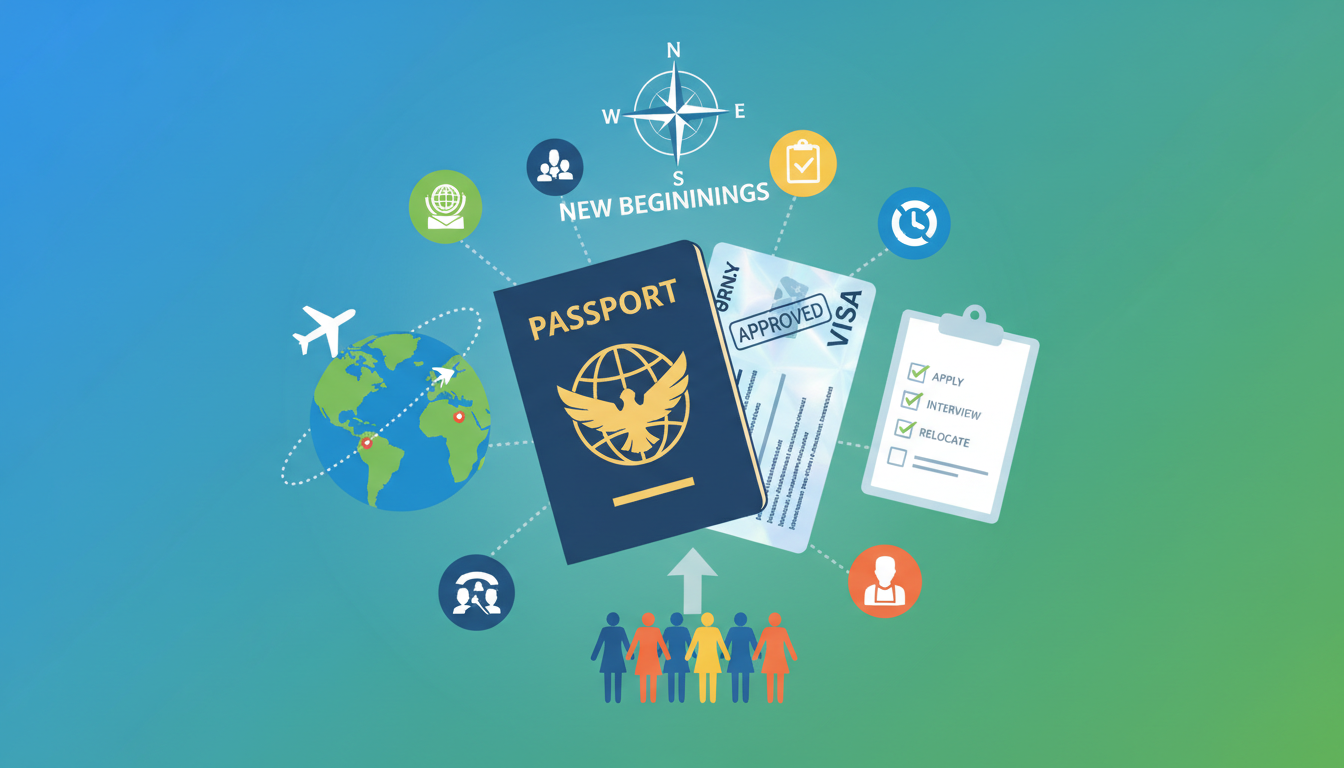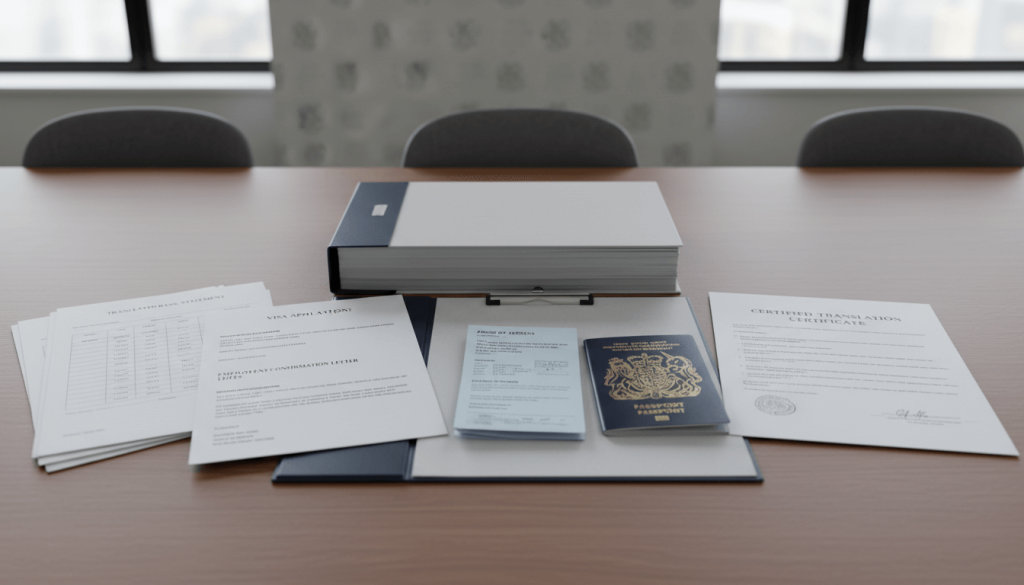
If you are preparing a visa, settlement, sponsorship, or family application, home office documents translation is rarely just about the obvious paperwork. Most applicants remember the passport, birth certificate, marriage certificate, or diploma. The documents that actually get forgotten are the supporting documents: the proof of address translation, the employment letter translation, the bank statement translation, and the extra immigration evidence that quietly carries the case.
That is where avoidable delays start.
A strong application is not built on one headline document. It is built on a bundle that tells a consistent story about who you are, where you live, how you are supported, what you earn, what relationship you rely on, and why the evidence can be trusted. When one supporting document is left untranslated, the missing piece can weaken the whole file.
This is the part many generic guides skip. They tell you what the main document is. They do not tell you which supporting documents people forget until the upload stage, the solicitor review, or the refusal letter.
The real issue is not the “main” document
In practice, applicants often translate the document they think matters most and leave the rest in the original language.
Examples include:
- translating the marriage certificate but not the joint tenancy agreement
- translating the degree certificate but not the academic transcript
- translating the sponsorship letter but not the sponsor’s bank statements
- translating the passport biodata page but not the proof of address bundle
- translating payslips but not the employer confirmation letter
- translating one bank statement page but not the pages that show balances, account holder name, or incoming salary
That approach creates gaps.
A caseworker or reviewing team does not read documents in isolation. They read them as evidence. If one untranslated document is the document that proves the address, salary, accommodation, timeline, or relationship, it can become the weak point in an otherwise well-prepared application.
The supporting documents people forget most often
Proof of address documents
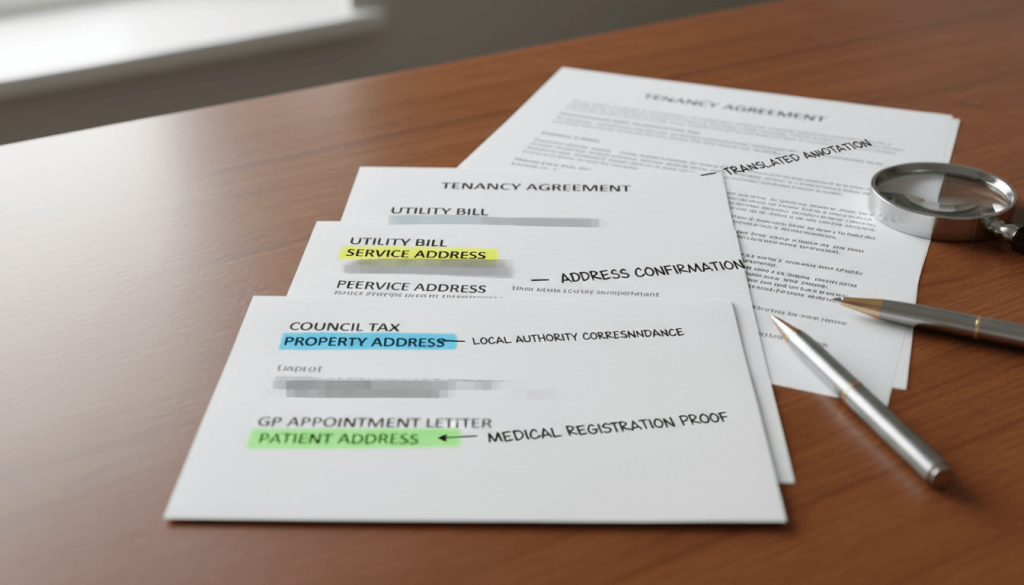
This is one of the most commonly overlooked areas in immigration evidence.
Applicants often focus on identity documents and forget that address evidence may be doing important work in the background. It may be showing cohabitation, residence history, sponsor accommodation, continuity of residence, or practical ties to a property.
Common examples include:
- tenancy agreements
- utility bills
- Council Tax bills
- bank letters showing the same address
- GP or dentist letters
- landlord letters
- mortgage statements
- local authority letters
- residence permits showing the address
The problem is not just whether the document exists. The problem is whether the part that matters is readable in English. Many proof-of-address documents contain the critical details in side columns, headers, tables, service addresses, issue dates, or footnotes. If those details are left untranslated, the document may no longer prove what you think it proves.
What people miss in proof of address translation:
- full service or residential address
- account holder name
- issue date and billing period
- provider or authority name
- reference numbers
- notes showing shared occupancy or linked accounts
- back-page remarks or reverse-side stamps
A translation that only summarises “utility bill” is often too weak. The strength of the document is in the details.
Employment letters and salary confirmations

An employment letter translation is often treated as optional until someone realises that the employer letter is doing more than confirming a job title.
In many applications, the employer document helps show:
- start date of employment
- current role
- salary
- employment type
- employer contact details
- continued employment
- approved leave
- overseas assignment details
- sponsorship or relocation arrangements
This is especially important where income, work history, stability, or sponsor-backed employment needs to be clear.
A common mistake is translating payslips but forgetting the employer letter that ties the payslips together. Another is translating the letter body but missing the letterhead, signatory details, company registration details, or stamp.
If the letter is being relied on as evidence, the translation should preserve:
- employer name
- letterhead details
- employee name
- job title
- start date
- salary figures
- dates covered
- named signatory
- signature block
- company contact information
A salary confirmation with no translated sign-off details is much weaker than a full, properly formatted translation.
Bank statements and financial evidence
A bank statement translation is one of the biggest trouble spots in Home Office files because applicants often underestimate what the statement is proving.
It may be used to show:
- maintenance funds
- savings history
- salary payments
- sponsor support
- rental income
- joint finances
- shared address
- account ownership
- timing of funds
What gets forgotten is that decision-makers do not just need a balance. They need context. They need to see whose account it is, the date range, the transaction pattern, the currency, and how the figures connect to other evidence.
The most common bank statement translation mistakes are:
- only translating the first page
- leaving transaction pages untranslated
- leaving currency labels unexplained
- missing account holder details
- missing statement period
- omitting incoming salary descriptors
- ignoring stamps, verification notes, or bank letters
- cutting off footer details on exported PDFs
For some routes, the issue is not just translation. It is document format and evidential quality. That means a statement can be translated well and still be weakened if the original supporting evidence is incomplete.
Sponsor and accommodation documents
Sponsor-backed applications often fail in small ways, not dramatic ones.
Applicants may remember the sponsor letter but forget the documents that make the sponsor letter credible, such as:
- sponsor bank statements
- sponsor payslips
- sponsor proof of address
- accommodation letters
- tenancy agreement or mortgage evidence
- ID documents linked to the sponsor
- evidence of relationship between applicant and sponsor
If the sponsor says they will provide accommodation, the accommodation evidence matters. If the sponsor says they will provide funds, the financial evidence matters. If the sponsor is a relative, the relationship evidence matters.
A sponsor letter is not a substitute for the documents that support it.
Relationship and cohabitation evidence
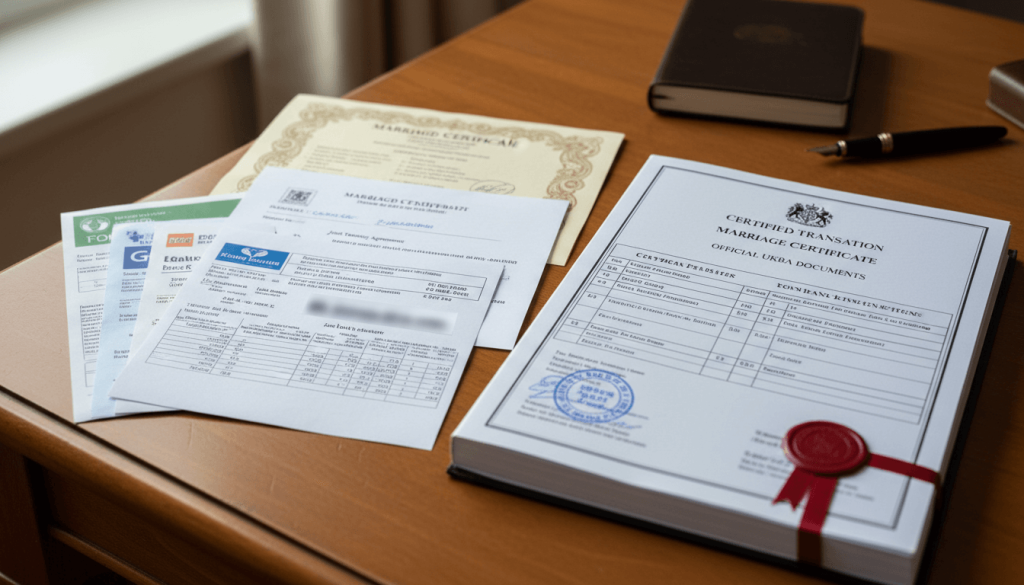
For family and partner routes, applicants often translate the marriage certificate and think the relationship evidence is complete.
But the supporting file may also depend on:
- joint bank statements
- tenancy agreements
- utility bills
- Council Tax bills
- medical letters showing the same address
- letters from official bodies addressed to both parties or to each party at the same address
- travel evidence
- financial support records if living apart
These are precisely the documents that people forget because they do not look “official enough” at first glance. In reality, they are often the documents that show day-to-day reality.
If the application relies on living together, sharing expenses, or maintaining an ongoing relationship, these documents can be central.
Extra documents that appear late in the process
Some documents only become relevant once the application route is reviewed more closely.
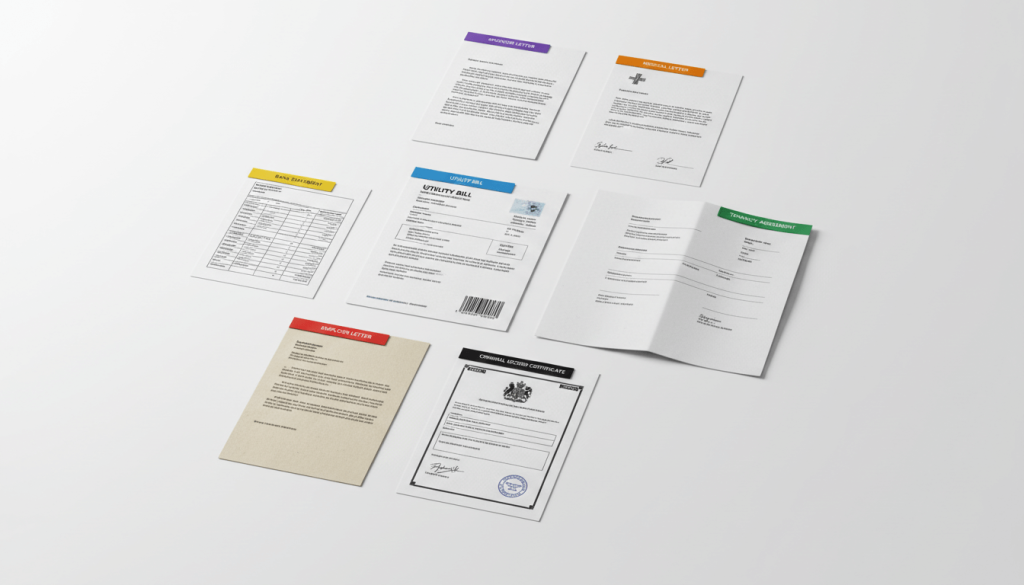
These often include:
- tuberculosis test certificates
- criminal record certificates
- academic transcripts
- Ecctis-related qualification evidence
- parental consent letters for minors
- birth certificates proving parentage
- divorce decrees or prior marriage evidence
- rental income documents
- self-employment records
- accommodation offers from family or friends
These are not “extra” because they are less important. They are extra because they are route-specific. That makes them easy to miss until the checklist is generated or a professional reviews the case.
A simple rule that catches most translation mistakes
Here is the safest practical rule:
If a document helps prove identity, address, funds, employment, accommodation, relationship, residence, or timeline, treat it as potentially important enough to translate.
That rule catches far more issues than asking, “Is this a certificate?”
Certificates are easy to spot. Supporting evidence is where real document risk sits.
What a Home Office-ready translation should include
A translation for official submission should not look like an informal summary or a quick language note.
At minimum, the translated document should clearly support formal submission by including:
- confirmation that the translation is accurate
- date of translation
- translator or translation company details
- signature or authorised certification format
- clear connection to the original document
- full coverage of the relevant content, not just a label or summary
Where the application relies on the original document, the translation should help the reviewing authority verify what the document is, who issued it, what it says, and why it matters.
That is why formatting matters too. Tables, headers, stamps, seals, annotations, account summaries, and letterheads are not decorative. They are often evidential.
The five places applicants lose strength in the evidence bundle
1. They translate the obvious document, not the supporting document
The main certificate gets translated. The evidence behind it does not.
2. They translate only the “important page”
The overlooked page often contains the name, date range, balance, address, stamp, or signatory.
3. They summarise instead of translating
A short note saying “bank statement attached” is not the same as a document that shows the full evidential trail.
4. They ignore formatting
Misread tables, missing footers, and untranslated stamps can change the meaning or weaken trust.
5. They send documents one by one
A translation provider can only flag missing supporting documents if they see the full bundle or at least the full category of evidence.
A smarter way to prepare your file
Before you upload anything, sort your documents into evidence groups rather than by file name.
Group 1: Identity and civil status
- passport
- birth certificate
- marriage certificate
- divorce decree
- national ID
- residence permit
Group 2: Address and residence
- tenancy agreement
- utility bills
- Council Tax bills
- bank letters with address
- GP or dentist letters
- landlord letters
Group 3: Employment and income
- employer letter
- salary confirmation
- payslips
- tax records
- P60
- self-employment records
Group 4: Funds and financial support
- bank statements
- savings statements
- sponsor bank records
- rental income evidence
- accommodation support letters
Group 5: Relationship and dependants
- joint address evidence
- joint finances
- birth certificates
- consent letters
- school letters
- family relationship records
Once grouped, the missing translations become much easier to spot.
Practical checklist by application type
Visitor applications
Often forgotten:
- employer letter
- personal bank statements
- sponsor support letter
- proof of accommodation
- proof of current address
- travel history support documents
Work routes
Often forgotten:
- bank statements showing maintenance funds
- criminal record certificate where required
- qualification evidence
- employment history documents
- spouse or child relationship evidence for dependants
Family and partner applications
Often forgotten:
- joint address evidence
- bank statements showing shared finances
- tenancy agreement
- Council Tax or utility bills
- employer letter supporting the financial requirement
- supporting evidence from prior marriages or children
Student applications
Often forgotten:
- bank evidence
- financial sponsor consent
- parental consent for under-18s
- birth certificate proving relationship to parent or guardian
- academic transcript, not just the degree certificate
Residence-based applications
Often forgotten:
- longer-period proof of residence
- annual bank summaries
- official letters showing address
- employer letters confirming UK-based employment period
- dated documents that fill gaps in the timeline
When partial translation becomes risky
There are cases where a narrow extract may look efficient but becomes risky in practice.
For example:
- a tenancy agreement where the translated first page does not include the signature page
- a bank statement where the translated summary page does not show the transaction history that proves salary or residence
- an employer letter where the translated body does not include the signatory block
- a utility bill where the service address appears only in the top corner or on the second page
- a residence document where the reverse side contains conditions, remarks, or issue details
The safer approach is to assume that any page carrying meaning, verification, or context should be translated as part of the same evidential unit.
A case-style example
A partner visa file may contain a translated marriage certificate and a strong personal statement. On paper, that feels complete.
But if the tenancy agreement, Council Tax bill, and joint bank statement remain untranslated, the application may be missing the everyday evidence that shows the couple actually live together and share responsibilities.
The problem is not the marriage certificate. The problem is the untranslated relationship evidence around it.
The same pattern appears in work applications. A translated degree certificate looks helpful. But if the bank statements, employer letter, or criminal record certificate are left untranslated, the file can still be incomplete where it matters most.
How to make the bundle easier to review
A strong submission is easier to trust because it is easier to read.
Use these practical steps:
- Keep the original and translation together for each document.
- Use file names that explain what the document is.
- Keep all pages, including reverse pages, stamps, and annexes.
- Do not crop out letterheads, logos, footers, or margins.
- Keep multi-page statements in order.
- Flag urgent deadlines before translation starts.
- Send the full evidence set for review, not just the page you think is important.
That last point saves more trouble than almost anything else.
What to do if you are not sure a document needs translation
Do not ask only, “Is this document official?”
Ask:
- What fact does this document prove?
- Is that fact important to the application?
- Is that fact readable in English?
- Does another document rely on it?
- Would the case still make sense without it?
If the answer points back to money, address, employment, accommodation, relationship, or eligibility, include it in the review pile.
That is the difference between a document bundle that merely exists and one that is genuinely submission-ready.
Need a fast review of the full bundle?
Send the complete set of originals together, including supporting documents many applicants overlook. That makes it much easier to identify whether you need a proof of address translation, employment letter translation, bank statement translation, or a wider immigration evidence pack before submission.
Why clients use 24 Hour Translation for urgent official files
Certified document support for immigration, legal, academic, and business paperwork, secure handling, and fast turnaround options including same-day, 12-hour, and 24-hour service windows.
Final thought
Most Home Office translation problems do not begin with the document everyone remembers. They begin with the document no one thought to translate.
The marriage certificate is remembered. The joint tenancy agreement is forgotten.
The degree certificate is remembered. The transcript is forgotten.
The sponsor letter is remembered. The sponsor’s bank statements and address proof are forgotten.
The safest approach is simple: review the evidence as a bundle, not as a list of file names. When you do that, the missing translations become visible before they become a problem.
If your application depends on proving funds, residence, work, sponsorship, family links, or shared address, the supporting documents are not secondary. They are part of the case.
FAQs
Do Home Office supporting documents need certified translation?
Yes. If a supporting document is not in English or Welsh and it is being relied on in the application, it should usually be submitted with a certified translation suitable for official review.
Is proof of address translation necessary for a visa or family application?
It often is. If the proof of address document is being used to show residence, cohabitation, accommodation, or sponsor support, the relevant content should be translated clearly and fully.
Do I need an employment letter translation for Home Office documents?
If the employment letter is being used to show your role, income, employer details, work history, or financial position, it should be translated as part of the evidence bundle.
Is bank statement translation required for immigration evidence?
If the bank statement is being used to prove maintenance funds, salary, savings, sponsor support, shared finances, or address, a proper bank statement translation is usually essential.
Can I translate only the first page of a bank statement or tenancy agreement?
That is often risky. The account owner, address, statement period, signatures, verification notes, and key clauses may appear on other pages. Translating only one page can weaken the evidence.
What documents do people forget most in home office documents translation?
The most frequently forgotten items are proof of address documents, employer letters, bank statements, sponsor evidence, joint residence documents, and route-specific records such as TB certificates, criminal record certificates, and financial sponsor consent letters.