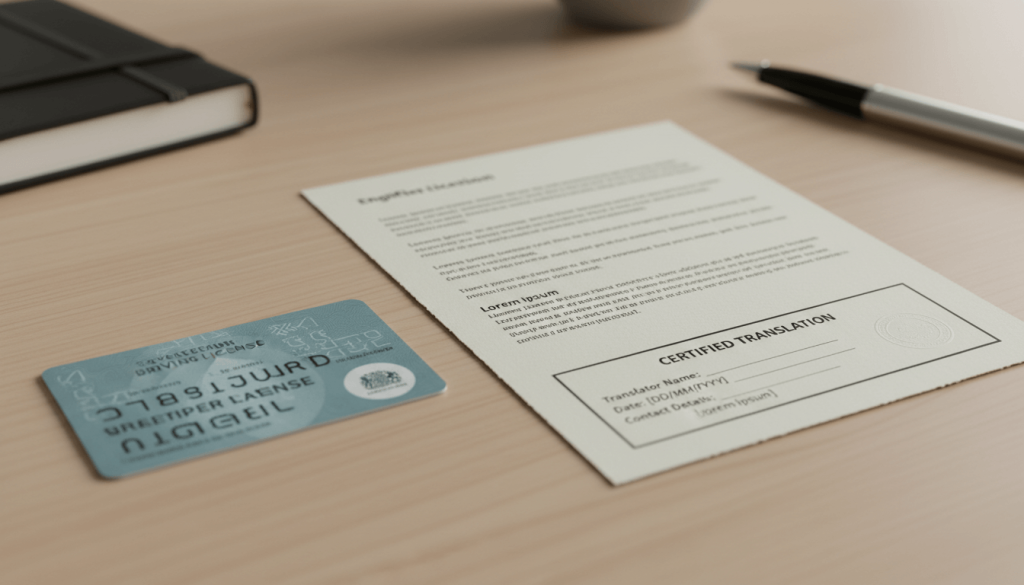
A driving licence translation can look simple on the surface. It is often just a card, sometimes bilingual, and usually shorter than a birth certificate or court order. Yet this is exactly why so many packs go wrong. The applicant assumes the licence is “easy,” the translator treats it as a basic document, and the submission ends up missing the details that actually matter: category codes, restrictions, reverse-side notes, issuing authority wording, and a certification page that does not clearly do its job.
For a DVLA driving licence translation, the goal is not merely to turn words into English. The goal is to produce a translation pack that is clear, complete, and credible at first glance. The person reviewing it should be able to match the original licence to the translation quickly, understand the holder’s details and entitlements, and see a proper certification statement without having to ask for anything further.
That is the real standard to aim for.
If your licence is not fully readable in English or Welsh, or if you are preparing documents for a non-GB licence process, a professionally prepared certified translation helps remove ambiguity before it becomes delay. And when deadlines matter, that clarity is often more valuable than speed alone.
The practical test: what makes a driving licence translation “submission-ready”
A weak translation tells the reader what the words mean.
A strong translation tells the reader exactly what document they are looking at, where each detail appears, what each code or category means in context, and who is certifying the translation.
That difference matters.
A submission-ready pack should help the reviewer answer five questions immediately:
- What document is this?
- Who does it belong to?
- Which side of the licence contains which details?
- Are the vehicle categories, dates, and restrictions fully clear?
- Has the translation been formally certified by a named professional or agency?
If any one of those points is blurred, the pack becomes slower to assess.
When a DVLA driving licence translation is usually relevant
A foreign licence translation often becomes relevant when you are dealing with one of these situations:
- You are exchanging a non-GB licence and the original is not fully readable in English.
- You need the licence details clearly understood as part of a driving-related application pack.
- The licence includes category information, endorsements, restrictions, or issuing notes on the reverse side that would otherwise be unclear.
- The document is partly bilingual, but key fields remain in another language or script.
- The name on the licence needs consistent rendering across supporting documents.
This is where many people lose time. They assume that a partly bilingual card does not need a formal translation. In practice, the issue is not whether some text appears in English. The issue is whether every relevant field the reviewer may rely on is clear, complete, and professionally certified.
What a certified translation should include
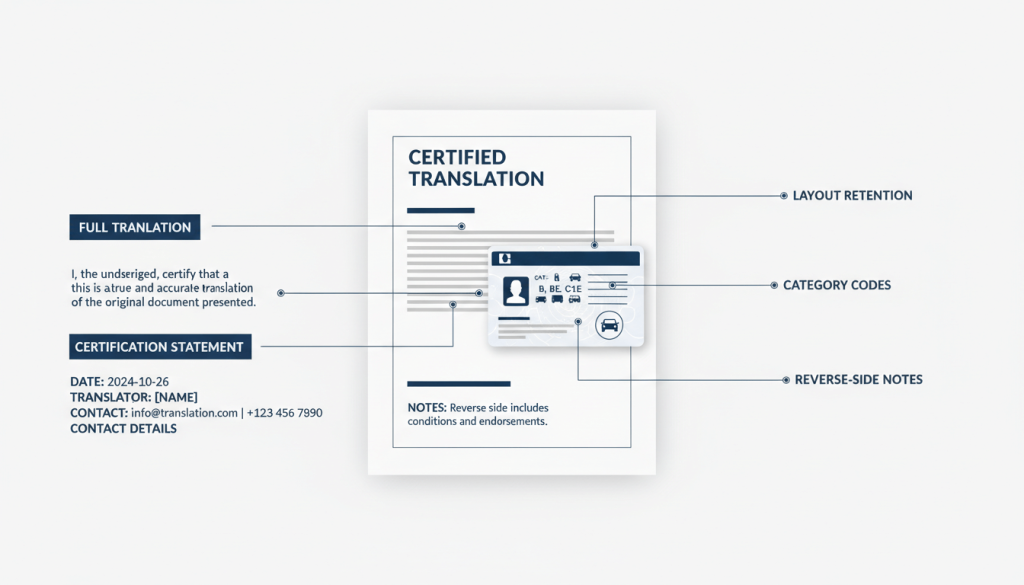
At minimum, the translation should include the certification wording expected for official use in the UK. But for a driving licence, minimum is not the same as strong.
A proper DVLA driving licence translation should include the following.
1. A complete translation of all relevant text
That means more than the obvious front-side fields.
A good translation covers:
- full name
- date of birth
- place of issue, where shown
- licence number
- issue date
- expiry date
- issuing authority
- address, where present
- vehicle categories
- conditions or restrictions
- back-side text, notes, legends, abbreviations, and codes
- stamps, seals, or handwritten notes, where applicable
If the reverse side contains category tables, restriction numbers, or entitlement notes, those should never be left out just because the front looks more important.
2. A clear certification statement
The certification page should make it obvious that the translation is a true and accurate rendering of the original document.
For best results, place this statement on the translation itself or on a certification page attached to it, not in a separate email or loose note.
3. The date of translation
This should be visible and easy to find. Missing dates create avoidable questions, especially when documents are part of a time-sensitive application pack.
4. The translator’s full name and contact details
This is not a decorative extra. It is part of what makes the certification credible. A proper name, business identity where relevant, and contact details should appear clearly.
5. Full layout retention where it improves clarity
Driving licences are structured documents. The order and position of fields matter.
A strong translation reflects the layout of the original so the reviewer can compare:
- front to front
- back to back
- category table to category table
- code list to code list
The closer the structure is to the original, the easier it is to assess.
6. Notes for non-text elements
Holograms, emblems, watermarks, signatures, photos, barcodes, and machine-readable areas do not usually need to be translated word-for-word, but they should be noted where relevant.
Useful examples include:
- Photograph present
- Signature present
- Official emblem
- Security background
- Illegible stamp
- QR code present, not translated
This prevents confusion without pretending to translate what is not readable text.
7. Consistent name handling
If the licence is in Arabic, Cyrillic, Greek, or another non-Latin script, the spelling of the holder’s name matters across the whole pack.
A careful translator will check whether the licence spelling should match:
- the passport
- BRP or eVisa records
- proof of address
- application form
- supporting identity documents
This is especially important where a licence contains a local-script name on one side and a Latin-script version on the other.
8. Category and restriction clarity
This is the part many lightweight translations miss.
A driving licence is not just an identity card. It is also a record of entitlements. That means the translation should make category letters, dates, and restriction codes readable and logically presented.
If the original uses abbreviations, numeric restrictions, or footnote-style category notes, the translation should explain them cleanly rather than copying them in a confusing block.
Minimum acceptable vs genuinely helpful
| Element | Minimum version | Better version |
| Main fields | Front-side basics only | Front and back fully covered |
| Certification | Short statement only | Clear statement plus date, full name, and contact details |
| Layout | Plain text list | Structured to mirror original card |
| Codes and categories | Copied without explanation | Organised so entitlements are easy to review |
| Non-text elements | Ignored | Briefly noted where relevant |
| Name handling | Literal only | Checked for consistency across the pack |
That difference is what turns a translation from technically present into genuinely useful.
The part people forget: the reverse side of the licence
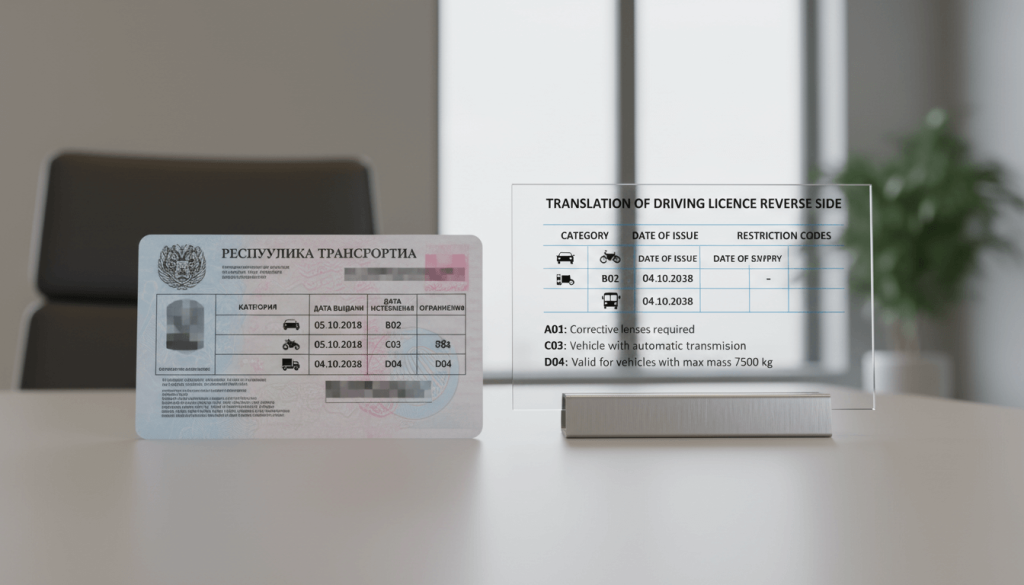
For many licences, the reverse side is where the important detail lives.
That can include:
- category tables
- validity periods
- restrictions
- issue history
- regional authority notes
- code legends
A translation that ignores the reverse side can still look polished while being incomplete.
In practical terms, this is one of the biggest reasons a driving licence translation feels “fine” to the applicant but weak to the reviewer. The front confirms identity. The back often confirms entitlement.
Both matter.
What to do if the licence is already partly in English
This is a common grey area.
If every field that matters is already fully readable in English, a full translation may not be necessary. But many licences are only partly bilingual. They may show the holder’s name in English while leaving categories, restrictions, issue notes, or local authority text in another language.
In that situation, the safest approach is to judge the licence as a whole, not by the front headline fields.
Ask a simple question:
Could someone reviewing this pack understand every relevant part of the licence without guessing?
If the answer is no, a certified translation is usually the safer option.
A useful distinction: translation, certification, notarisation, and IDP are not the same thing
People often mix these up.
Translation
The document is rendered into English.
Certified translation
The translation is formally confirmed as accurate by the translator or agency.
Notarisation
A notary is involved because a receiving body has asked for an extra layer of formal authentication.
International Driving Permit
This is a separate driving document. It is not the same as a certified translation of a foreign licence.
That distinction matters because the wrong service wastes both time and money. For a DVLA-focused pack, the first question is normally whether the licence needs a proper certified translation, not whether someone should jump straight to notarisation or confuse the issue with an IDP.
How to prepare your driving licence for translation
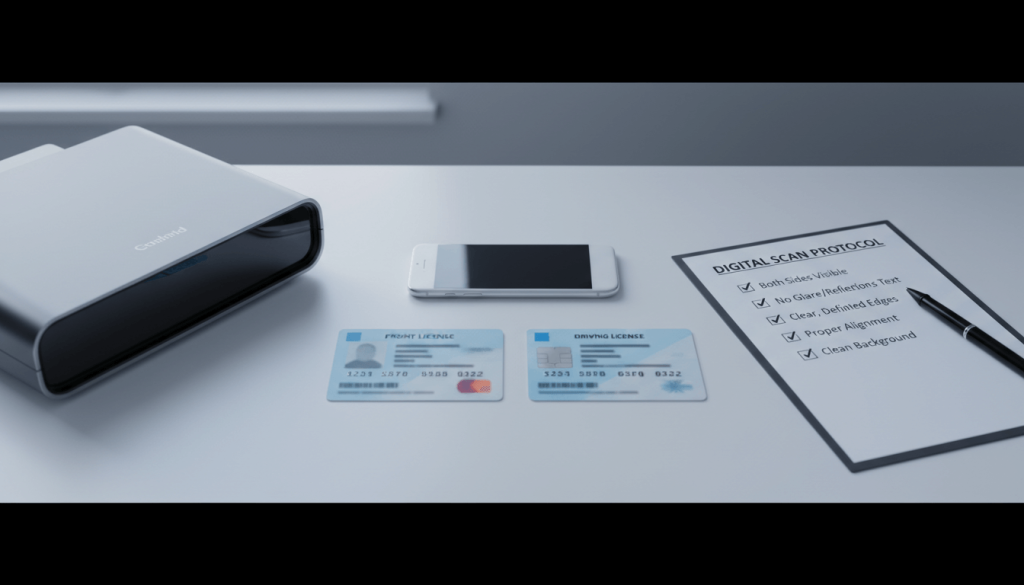
The quality of the source file affects the quality of the finished pack.
Use this checklist before sending the file:
- scan or photograph both sides
- make sure every edge is visible
- avoid glare over holograms and dates
- keep text sharp enough to zoom in
- send the original file, not a screenshot from a messaging app
- include any supporting note if a field is hard to read
- flag urgent deadlines in advance
- mention whether the licence will sit alongside a passport or immigration pack so name consistency can be checked
If the file is unclear, the translation can only be as strong as the source.
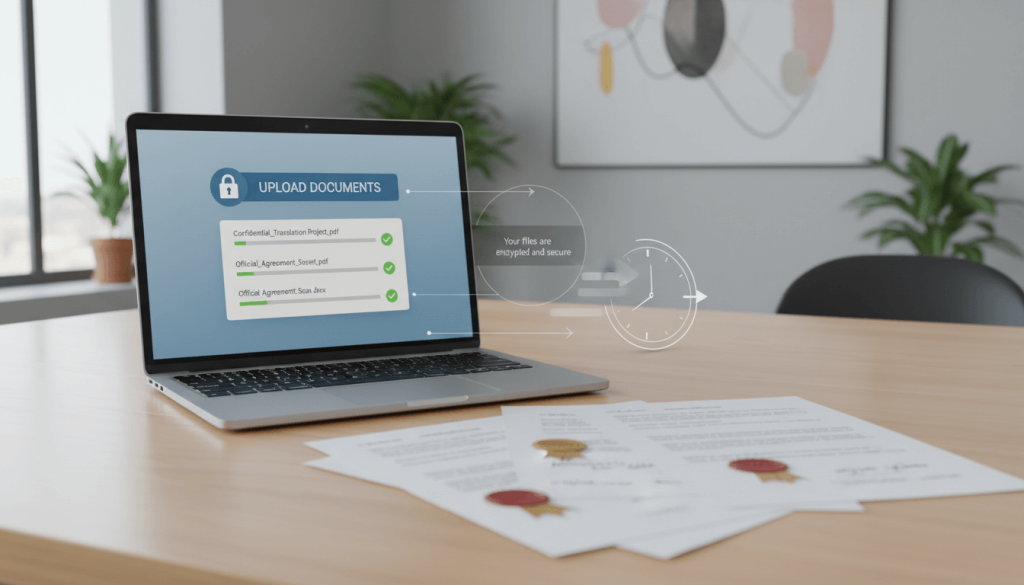
Need it checked before submission? Upload both sides together and ask for the certification page to be prepared for official use from the start. That is much quicker than fixing the wording after the pack has already been assembled.
Common mistakes that cause avoidable delays
Treating the licence like a simple ID card
A driving licence is also an entitlement document. Category details matter.
Translating only the front
The reverse side often contains the key information.
Using a generic certification line
A vague statement without date or contact details looks weaker than it should.
Omitting layout cues
When the reviewer cannot match the translation to the original quickly, confidence drops.
Ignoring spelling consistency
A licence name that does not align with the passport or application can create unnecessary questions.
Sending a poor-quality image
Blurred dates and category codes are one of the fastest ways to create problems.
Assuming bilingual means fully clear
Partly bilingual licences still need a proper field-by-field review.
What a strong certification page can look like
A professional certification page for a driving licence translation will usually contain:
- the document description
- the language pair
- a statement confirming accuracy
- the translation date
- the translator’s full name
- agency or business details where relevant
- contact information
- signature block or authorised sign-off, where used in the provider’s process
It should also identify the original document clearly enough that the certification is tied to that specific licence, not to a vague “document attached.”
Example: the difference between a weak and strong pack
Weak pack
A client sends a quick mobile photo of the front of the card only.
The translation lists the name, date of birth, and licence number in plain text.
A one-line certificate says it is translated correctly.
No back-side codes are included.
No issuing authority note appears.
The name spelling does not match the passport in the wider application file.
Strong pack
The client sends clear images of both sides.
The translation mirrors the card layout.
All visible fields, categories, dates, and restrictions are included.
Non-text elements are noted where relevant.
The certification page contains a proper accuracy statement, date, full name, and contact details.
The name spelling is aligned with the passport and supporting documents.
Only one of those packs feels ready the moment it is opened.
A better way to think about DVLA driving licence translation
The safest mindset is this:
A certified translation should remove questions, not create new ones.
That means your translation should not simply be “accepted in theory.” It should actively help the reviewer understand the licence at speed.
For driving documents, the most valuable qualities are:
- completeness
- legibility
- formal certification
- logical structure
- consistency with the wider application pack
If those five things are present, the document does its job properly.
Why applicants choose a specialist service for this document type
Driving licences look short, but they are detail-heavy. The best results usually come from a translator who understands official document structure, not just language.
That matters because driving licences often include:
- condensed field layouts
- category tables
- local abbreviations
- coded restrictions
- multilingual text
- hard-to-read print on the reverse
A specialist document team is more likely to preserve the structure, flag issues early, and produce a certification page that looks ready for official use rather than improvised.
If your deadline is close, start the project with both sides of the licence and any matching ID document. That makes it easier to produce a clean, coherent pack the first time.
Final word
For a DVLA driving licence translation, the essential question is not whether the document can be translated. It is whether the finished translation makes the original easy to trust.
That is what a certified translation should include:
- the full content that matters
- the structure that helps comparison
- the certification details that support acceptance
- the consistency that keeps the wider pack aligned
If you want the process to move smoothly, do not settle for a bare-minimum version. Send a clear copy of both sides, request a properly certified translation, and make sure the finished pack reads like it was prepared for official review from the outset.
FAQs
Do I need a DVLA driving licence translation if my foreign licence is partly in English?
Possibly. The real issue is whether every relevant field is fully clear in English. If categories, restrictions, issuing notes, or reverse-side details remain in another language, a certified translation is usually the safer option.
What should a certified translation statement include for a driving licence?
It should confirm that the translation is accurate and should clearly show the translation date, the translator’s full name, and contact details. For a stronger submission, it should also identify the document being translated.
Does a foreign licence translation need to include both sides of the card?
Yes, if both sides contain relevant information. Many driving licences place category tables, restrictions, and validity notes on the reverse, so translating the front alone can leave the pack incomplete.
Is a DVLA driving licence translation the same as an International Driving Permit?
No. A certified translation explains a foreign licence in English. An International Driving Permit is a separate permit used for driving in certain countries. They serve different purposes.
Can I use a plain text translation without layout retention?
You can, but it is rarely the best approach for a driving licence. A structured translation that mirrors the original layout is much easier to review and reduces the chance of confusion.
What is the most common mistake with foreign licence translation?
The most common mistake is treating the document as simple ID and overlooking the back-side categories, codes, and restrictions that define what the holder is actually entitled to drive.