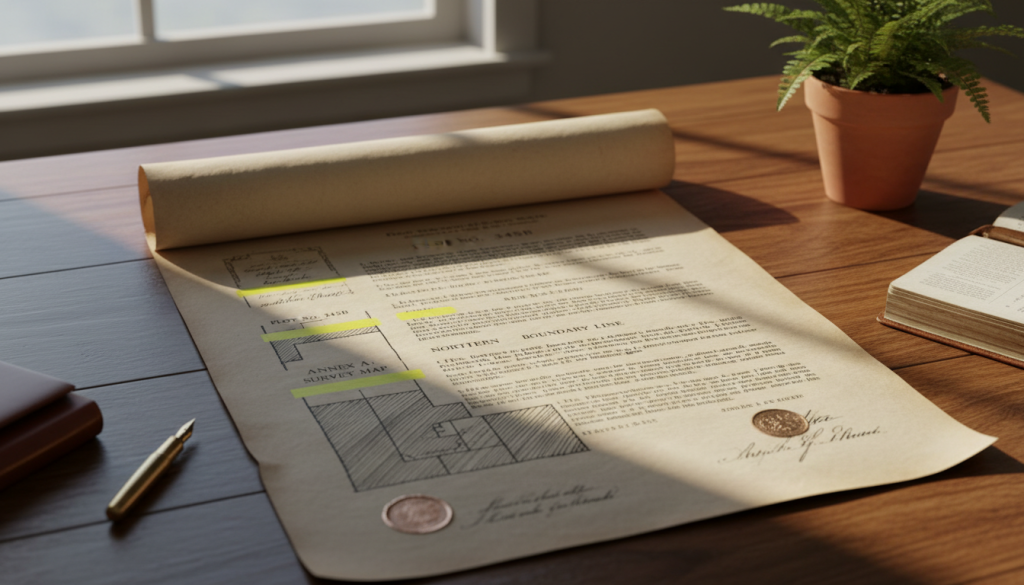
Property Deed Translation Tips
Property deed translation tips are crucial because deeds are not ordinary legal documents. A single deed can contain ownership wording, parcel identifiers, boundary calls, plot references, registration details, maps, handwritten notes, seals, and annex pages that may carry the most important legal description in the whole file. When a deed is translated for a court, bank, title review, probate matter, immigration file, or cross-border transaction, the goal is not to make it sound smoother. The goal is to preserve meaning, structure, and documentary integrity without quietly changing the rights described in the original.
If your file includes a deed, land certificate, title page, survey extract, or annex pack, our legal translation services and document translation services are built for records that must stay accurate down to the smallest reference. A property deed is part legal instrument, part location record, and part evidence package. That is why the best property deed translation tips are not about elegant wording. They are about discipline: keep identifiers intact, keep the legal description traceable, and keep every attachment tied to the page that gives it meaning.
Why Deeds Are Harder to Translate Than Most Legal Documents
A property deed often combines three different layers of information at once:
1. The Ownership Layer
This is the part that identifies the grantor, grantee, date, transfer language, and any conditions tied to the transfer.
2. The Location Layer
This includes the legal description of the land itself: lot and block references, section and township references, metes and bounds, plot numbers, subdivision names, book and page numbers, plan numbers, survey citations, and coordinates.
3. The Evidence Layer
This includes stamps, signatures, witness blocks, registration notes, handwritten annotations, marginal notes, seals, and annexes or exhibits incorporated by reference. A weak translation usually handles only the first layer. A strong translation respects all three.
The Parts of a Deed That Most Often Cause Trouble
Plot References and Parcel Identifiers
Plot references look simple, but they are often the quickest place for a translation to fail. A translator may be tempted to normalize or “improve” them. That is a mistake. These items should normally be reproduced exactly as they appear, with translation only where necessary around them:
- Plot number
- Parcel ID
- Book and page reference
- Folio number
- Registration number
- Plan or plat number
- Section, township, range
- Lot and block reference
- Municipality, district, ward, or cadastral zone
- Survey sheet or map sheet reference
If the original says “Plot 12-B, Sheet 4, Block C, Folio 219,” the translation should not turn that into a cleaner but less exact version. Legal records depend on matching the translated file back to the original record trail.
Boundary References and Legal Descriptions
This is where property deed translation tips become especially important. A deed may define the property by:
- Lot and block
- Survey reference
- Metes and bounds
- Coordinates
- Adjoining owners or boundaries
- Rights-of-way
- Easements
- Curved boundary data
- Area statements
In property translation, a wrong preposition can matter. A mistranslated direction, curve detail, adjoining parcel reference, or point of beginning can create confusion that affects review, filing, or due diligence.
Annex Pages, Exhibits, and Attachments
Many deeds do not contain the full land description on the main page. Instead, they say that the property is described “as more fully set out in Annex A,” “as shown on attached schedule,” or “as per survey plan attached hereto.” That means the annex is not optional reading. It is part of the deed package. If the main deed is translated but the annex pages are left out, the receiving authority may see an incomplete record. In practice, this is one of the most avoidable causes of delay.
The “Never Change These Items” Checklist
When handling a deed, some elements belong in a zero-edit zone. Translate the labels around them, but do not rewrite the substance unless the original itself requires expansion for legibility. Do not casually alter:
- Deed number
- Registry references
- Parcel and plot numbers
- Bearings and distances
- Coordinates
- Map references
- Survey references
- Dates
- Names as written in the source
- Book, volume, folio, and page references
- Area figures
- Page numbering
- Annex labels such as “Annex A,” “Exhibit 1,” or “Schedule B”
If something is unclear, the safer route is a translator’s note such as “[illegible]” or “[handwritten marginal note, partially unreadable]” rather than guesswork. The translator’s job is to preserve the record, not repair the original.
How to Translate Boundary References Without Over-Interpreting
Keep the Legal Description Traceable
Boundary language often looks repetitive, technical, or old-fashioned. That does not make it disposable. In fact, it is usually the part that matters most. A good translation should allow a reviewer to move back and forth between the source deed and the English version line by line. That means keeping the same order, the same logic, and the same visible connection between each directional call and each physical reference.
Preserve Metes and Bounds Structure
Where a deed uses metes and bounds, keep the structure intact:
- Point of beginning
- Direction of travel
- Distance
- Monument or marker
- Adjoining boundary or right-of-way
- Curve data where relevant
- Return to the place of beginning
For example, if a line call appears as a directional sequence with numbers, degrees, minutes, seconds, and measurements, the translation should preserve that formatting pattern. The wording around the line may be translated, but the sequence itself must remain easy to verify.
Translate Legal Meaning, Not Guesswork
Some deed terms do not have a perfect one-word equivalent across legal systems. That is where experience matters. The translator should reflect the legal function of the phrase without pretending two different property systems are identical. That is especially true for:
- Usufruct rights
- Co-ownership wording
- Occupancy rights
- Inheritance references
- Marital property references
- Encumbrance language
- Easements and servitudes
- Administrative land classifications
The safest approach is accuracy with restraint. Do not over-interpret. Do not “upgrade” the wording. Do not convert a source-law concept into a target-law concept unless the meaning is genuinely equivalent.
Annex Pages: When an Attachment is Really Part of the Deed
Some of the most useful property deed translation tips relate to annexes, because annex pages are often where translators or clients unintentionally split one legal instrument into separate pieces.
Translate Annexes When the Deed Incorporates Them
An annex should usually be translated when it contains any of the following:
- The full legal description
- Parcel maps or plot schedules
- Area breakdowns
- Registration extracts
- Boundary tables
- Survey references
- Rights-of-way details
- Co-owner schedules
- Property inventory lists
- Handwritten endorsements tied to the transfer
If the deed says the annex forms part of the document, treat it as part of the same translation project.
Match Annex Labels Exactly
If the source document says “Annex A,” the translation should still say “Annex A,” not “Attachment A” on one page and “Appendix A” on another. Consistency matters because reviewers compare labels across the whole packet.
Keep Cross-References Intact
Deeds often refer backward and forward across pages:
- “As described in Annex B”
- “See plan attached”
- “Subject to note 4 on page 3”
- “As recorded under Book 18, Page 224”
These cross-references must stay synchronized. A deed translation that reads well but breaks its own cross-references creates avoidable risk.
Formatting Rules That Prevent Confusion
Formatting is not decoration in a deed. It is part of the reading logic. A careful deed translation should preserve:
- Page breaks where legally meaningful
- Numbering hierarchy
- Indentation of legal descriptions
- Table structure
- Seals and stamp placement notes
- Signature block order
- Marginal note positions where relevant
- Front and back page sequence
- Annex order
Where exact visual duplication is not possible, the translated version should still make it obvious what belongs where.
A Practical Formatting Rule
If the original document uses a separate block for the legal description, the translation should also use a separate block. Do not hide the description inside a paragraph just because it reads more smoothly in English.
A Practical Note on Maps and Sketches
Maps do not always need to be redrawn, but labels on maps, legends, plot identifiers, and visible notations may need translation or translator notes. If the map is part of the annex pack, it should be reviewed as part of the same deed file.
A Case-Style Example
A client submits a deed for English translation. The first page looks straightforward: owner names, property address, registration office, and transfer date. At first glance, it appears to be a one-page job. But the second page contains the actual legal description. The third page contains a survey extract. The fourth page includes handwritten registry notes. The back page shows a seal and filing reference. An attached schedule lists the plot number that differs slightly from the marketing address.
A rushed translation that handles only page one may look complete to a non-specialist. It is not complete. A proper translation identifies the full deed pack, preserves the page order, carries across the legal description, keeps the survey references visible, translates the handwritten notes where legible, and clearly marks anything unreadable instead of inventing text. That is the difference between a translation that looks polished and one that is actually useful.
What to Send Before Requesting a Property Deed Translation
If you want the cleanest quote and the fewest delays, send the full file at the start.
Include:
- Every page of the deed
- Front and back pages
- Annexes, exhibits, schedules, and attachments
- Any survey page referenced in the deed
- Supporting registry extract if attached
- A note about where the translation will be used
- Deadline and required delivery format
- Whether certification, notarization, or apostille may be needed
If the deed contains faint stamps, handwritten amendments, or low-quality scans, say so early. A translator can plan for that. Hidden image-quality issues are one of the main reasons deed projects become slower than expected. If you are unsure what level of formalization you need, start with our certified translation services. For process questions, our certified translation FAQs and translation order process make the next step clear.
Do You Need a Certified, Notarized, or Apostilled Deed Translation?
The answer depends on the receiving authority. A property deed might be translated for:
- Title review
- Probate or estate administration
- Litigation
- Immigration evidence
- A foreign bank
- A land registry
- A tax or compliance file
- A notary or attorney review
- An international property sale or inheritance matter
Some authorities want a certified translation. Some want notarization as well. Some international uses may also require apostille or further authentication. What matters most is confirming the destination requirement before final issue. The translation itself should still be prepared with full documentary discipline from the beginning so it does not need to be rebuilt later.
Why Human Legal Translators Matter on Deed Work
Property deeds are exactly the kind of records where automated shortcuts create expensive problems. A deed can contain:
- Legal terms that depend on jurisdiction
- Abbreviations that are not standard outside one registry
- Handwritten notes
- Seals and filing references
- Inconsistent capitalization
- Archaic land description language
- Survey logic that has to stay in sequence
- Repeated references across multiple pages and annexes
This is why property deed translation tips always come back to one principle: precision beats speed when the record affects ownership, rights, or filing acceptance. At 24 Hour Translation, deed work benefits from the same strengths clients expect from serious legal translation: human review, consistent terminology, structured formatting, secure handling, and a final version that is ready for real-world submission rather than casual reading. If confidentiality matters, review our data security and privacy policy before you upload your file.
Need a Property Deed Translated?
If your deed includes plot references, boundaries, annex pages, registry notes, or survey language, send the full pack from the start. A strong deed translation should help the reviewer answer four questions immediately:
- Whose property is this?
- Which record is being referred to?
- What land is actually being described?
- Which attached pages form part of the legal instrument?
When those four answers stay clear, the translation is doing its job. Send us your deed, annexes, and any supporting pages for review. We will assess the file as a complete legal record, not just a few isolated pages, and prepare a version suitable for formal use.
Start your project today: Request a Quote or Upload your file through our document translation team or Contact our legal translation team.
FAQ
What Are the Most Important Property Deed Translation Tips?
The most important property deed translation tips are to keep plot references exact, preserve the legal description, include all annex pages, maintain page order, and avoid rewriting registry identifiers, measurements, or boundary calls.
Do Annex Pages Need to Be Translated with a Property Deed?
Yes, if the deed refers to annex pages, schedules, exhibits, or attached survey extracts as part of the property description or transfer record, they should usually be translated as part of the same package.
How Should Boundary References Be Handled in a Deed Translation?
Boundary references should be translated carefully without changing the structure of the legal description. Directions, distances, coordinates, adjoining boundaries, and point-of-beginning language should remain easy to compare against the original.
Do I Need a Certified Translation for a Property Deed?
Often yes, especially when the deed is being used for official, legal, immigration, probate, banking, or registry purposes. The exact requirement depends on the authority receiving the document.
Can a Property Deed Translation Include Handwritten Notes and Stamps?
Yes. Handwritten notes, marginal annotations, registry endorsements, visible seals, and stamp text should be translated where legible. If something cannot be read clearly, it should be marked honestly rather than guessed.
What Files Should I Send for a Property Deed Translation?
Send every page of the deed, front and back pages, annexes, survey pages, schedules, registry extracts, and any related attachments. A deed translation is safest when the translator sees the full record set.