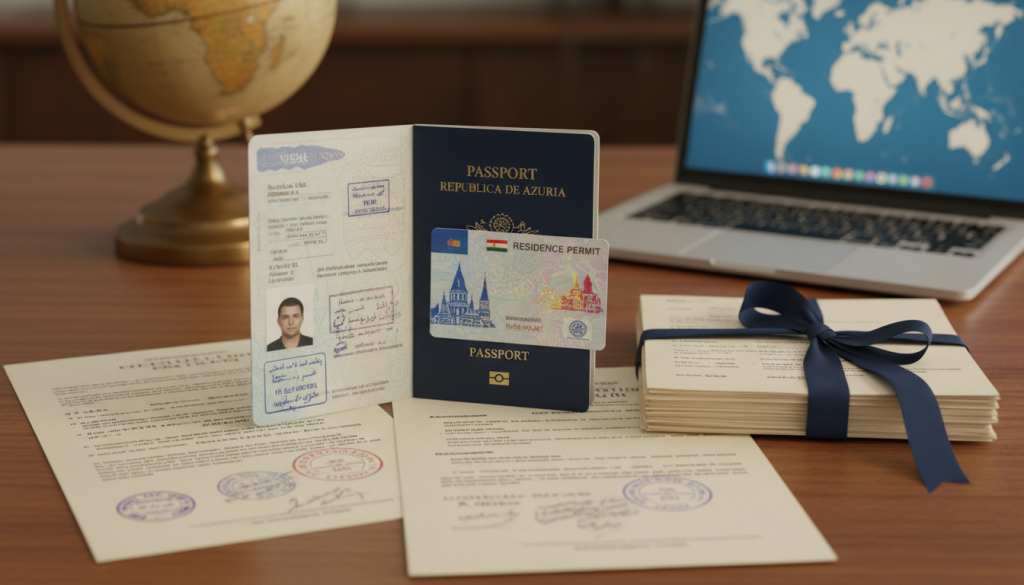
BRP and Residence Permit Translation: What Matters Most
If you are dealing with a BRP, a residence card, or a foreign residence permit, the most important first step is to separate status proof from document translation. That matters more than most people realize. In the UK, physical BRPs have been replaced by eVisas, but non-English supporting documents still generally need a full certified translation when they are submitted to the Home Office or other authorities.
Many people search for BRP translation requirements when the real issue is not translation at all. It is proving immigration status correctly. If your current UK status is held digitally, the right document route may be your eVisa and share code rather than a translated copy of an old card. On the other hand, if you are submitting a foreign residence permit in Italian, German, French, Spanish, Arabic, or another language, a professionally certified English translation may be essential.
That distinction is where delays usually begin. A translation can be perfect and still fail if the wrong document was translated, the back of the card was ignored, the permit number was mistyped, or the certification wording was incomplete. The safest approach is to treat residence permits as high-risk identity documents: every field matters, every date matters, and every number must stay exactly aligned with the original.
The best residence permit translations do not “tidy up” the source document. They preserve it accurately, explain it clearly, and make it easy for the receiving authority to verify.
Start here: do you actually need a BRP translation?
For most UK submissions, the practical rule is simple: if a supporting document is not in English or Welsh, it should be accompanied by a certified translation. GOV.UK guidance across visa and immigration routes repeats that principle, and Home Office guidance for supporting documents states that the translation must be full and capable of independent verification.
What changes in 2026 is the BRP point. BRPs were once the standard physical proof of UK immigration status, but that is no longer the live system. GOV.UK now states that all BRPs have expired and have been replaced by eVisas. That means a person who is trying to prove their current right to live, work, or rent in the UK may need to access their eVisa and generate a share code instead of relying on a translated card.
Situations where a translation is usually needed
A certified translation is usually the right move when you are submitting:
- a foreign residence permit as part of a UK immigration file
- a non-English residence card to a university, employer, bank, solicitor, or court
- a permit with remarks, restrictions, endorsements, or observations that are not in English
- supporting documents where the permit is being used to confirm identity, lawful stay, nationality history, or address history
Situations where translation may not be the real solution
A translation may not be the main issue when:
- you are trying to prove current UK immigration status
- the authority specifically asks for an eVisa share code
- the issue is an incorrect name, date of birth, or status on the digital record
- the receiving party needs a live status check, not a translated copy of an older document
In those cases, the solution may be to access your UKVI account, generate a fresh share code, update your account details, or report an eVisa error. A share code lasts 90 days and can be generated again whenever needed.
The fields that matter most in a residence permit translation
The strongest residence permit translations are not judged by elegant wording. They are judged by whether every critical identity field survives the translation process without distortion.
1. Full name and name order
This is where many avoidable problems start. Translators should not “improve” the name, swap surname and given name for convenience, or silently match a preferred spelling used on another document. The translation should reflect the document exactly and flag any obvious transliteration issue only where necessary.
That matters even more when the permit holder has multiple documents with slightly different Romanised spellings. A residence permit translation that says one thing while the passport says another can create unnecessary questions even when both refer to the same person.
2. Permit number, document number, and personal identifiers
One wrong digit can turn a valid permit into an unmatchable record. Document numbers, personal identification numbers, card numbers, and reference codes should be transferred exactly as shown.
Best practice is to preserve:
- all letters, numbers, spaces, and punctuation exactly
- prefixes and suffixes
- issue and expiry dates without conversion errors
- any official reference codes printed on the front or reverse
3. Dates
Dates on residence permits often cause confusion because formats vary. A source document may show 04.06.2025, which some readers will interpret differently depending on country format. Good translation practice keeps the original value faithful while making the meaning clear in English where needed.
The safest approach is to preserve the original date and present it clearly in English context, rather than rewriting it in a way that risks changing the meaning.
4. Issuing authority, status type, and validity conditions
A permit is not just an ID card. It often says what kind of permission the holder has, who issued it, and what restrictions apply. That information can affect how an authority reads the document.
A complete translation should cover:
- issuing authority
- residence category or status type
- validity period
- work or study conditions
- remarks, observations, endorsements, or limitations
- any text on the reverse side
5. Stamps, seals, and non-standard notes
Small printed notes, over-stamps, handwritten entries, and back-side remarks are often where the real value sits. Leaving them out can make a translation incomplete even if the main body is accurate.
A professional translation should account for:
- official stamps and seals
- handwritten notes that are legible
- embossed elements where text can be identified
- annotations, amendments, and observation boxes
- reverse-side text and security-area wording where relevant
What the certified statement should include
For UK-facing submissions, the certification wording matters almost as much as the translation itself. GOV.UK guidance says a translation should confirm that it is accurate, include the translation date, and provide the translator’s full name, signature, and contact details so the document can be independently verified.
A practical certificate block for this type of document should include:
- confirmation that the translation is a true and accurate translation of the original
- date of translation
- translator’s full name
- signature
- contact details
- company details where applicable
A simple example of suitable wording is:
I certify that this is a true and accurate translation of the original document.
Translator name:
Signature:
Date:
Contact details:
That is the kind of wording that helps the receiving authority move forward rather than come back with questions. When a translation arrives without a proper certification statement, without contact details, or without clear attribution to the translator or translation company, it creates avoidable friction.
The mistakes that cause the most delays
Generic articles often say “use a certified translator” and stop there. In real permit work, that advice is too broad. The delays usually come from very specific technical mistakes.
Translating only the front of the card
Many permits carry conditions, renewal notes, or administrative text on the reverse. If the back is omitted, the translation may be incomplete.
Correcting the source instead of translating it
A translation is not a data-cleaning exercise. It should not fix spelling, rewrite dates, or standardise identifiers unless the original itself says so.
Losing layout meaning
A residence permit is compact. Labels, fields, and values are closely tied together. If the translated version becomes a loose paragraph instead of a structured document, it becomes harder to verify.
Ignoring remarks and observations
Those small fields often explain work rights, permit category, residence basis, or validity limitations. They are not optional.
Confusing an old BRP with current status proof
This is now one of the biggest UK-specific misunderstandings. BRPs have been replaced by eVisas, and an expired BRP can no longer be used for travel. It may still help in certain limited situations, such as accessing a UKVI account, getting a share code, or applying to stay in the UK, but it is no longer the main live proof of status.
BRPs, eVisas, and share codes: what matters now
This is the part many older pages miss. GOV.UK states that all BRPs have now expired and been replaced by eVisas. If a person still has permission to stay in the UK, they are expected to access that status through a UKVI account. GOV.UK also says an expired BRP may still be used for limited purposes for up to 18 months after the printed expiry date, including creating a UKVI account, getting a share code for right to work or rent, and applying to stay in the UK. It cannot be used for travel.
That changes how a translation service should advise clients. If someone says, “My employer needs my BRP translated,” the smarter response is not to rush into translation. It is to ask what the employer actually needs. If they need immigration status confirmation, the correct route may be an eVisa share code. GOV.UK says the person checking the status can use the share code service, and that code expires after 90 days.
If the digital record is wrong, the fix is also procedural rather than linguistic. GOV.UK provides routes to update UKVI account details and report eVisa errors where the name, date of birth, nationality, or immigration status is wrong.
A better workflow for permit translations
For residence permit and ID-style documents, the safest workflow is simple:
- Send a clear full scan or high-quality photo of both sides.
- Confirm where the translation will be submitted.
- Ask for a full certified translation, not a summary.
- Check that all names, dates, and numbers match exactly.
- Make sure stamps, notes, and back-side text are covered.
- Confirm the translation includes a proper certification statement.
- Request the output format you actually need, usually signed PDF, with hard copy if required.
That workflow aligns well with how 24 Hour Translation presents its service: clients upload documents, specify where the translation will be submitted, receive a clear quote and certification route, then get a professionally translated and reviewed document delivered digitally, with hard copies available on request.
Why clients are careful with this document type
Residence permits sit in an awkward category. They are short documents, but they carry outsized risk because they combine identity data, immigration status, dates, authority references, and restrictions in a very compact format.
A birth certificate translation can be rejected because of a name issue. A permit translation can be questioned because of a name issue, a number issue, a category issue, a date issue, or an omitted condition.
That is why the right brief for this job is not “translate my card quickly.” It is:
- preserve every field
- keep numbers untouched
- translate notes and restrictions
- certify the translation properly
- format it so the receiving authority can verify it without guesswork
A practical submission checklist
Before you send a BRP or residence permit translation anywhere, check these points:
- The document image is clear enough to read every field
- Front and back have both been included
- Names match the original exactly
- Numbers and dates have not been altered
- Remarks, restrictions, and observations are translated
- The certification block is complete
- The destination authority is known
- The delivery format matches the submission method
When those basics are right, the translation does its job quietly. It removes doubt. It reduces back-and-forth. It helps the receiving authority verify the file quickly.
The simplest way to avoid delays
The easiest way to avoid problems is to give the translation provider the full context at the start:
- what the document is
- which country issued it
- where it will be submitted
- whether the authority wants a certified, sworn, or notarised version
- whether the issue is translation, status proof, or both
A residence permit translation succeeds when it removes uncertainty. It should make the document easier to trust, easier to check, and easier to accept the first time.
FAQs
Do I need a BRP translation to prove my immigration status in the UK?
Not usually. Current UK immigration status is now generally proved through an eVisa and share code rather than a physical BRP. GOV.UK says BRPs have been replaced by eVisas, and share codes are used to prove status to employers, landlords, and others.
What are the main BRP translation requirements for UK submissions?
For UK-facing submissions, the key requirement is usually a full certified translation of any non-English or non-Welsh document. The translation should confirm accuracy and include the date, the translator’s full name and signature, and contact details.
What should a residence permit translation include?
A strong residence permit translation should include every relevant field on the document, including names, dates, permit numbers, issuing authority, status type, remarks, endorsements, and reverse-side text where present. It should also include a proper certification statement.
Can I translate only the front of my residence permit?
That is risky. Many permits include conditions, observations, and administrative wording on the reverse. A front-only translation may be incomplete and may create avoidable delays.
Does an expired BRP still matter?
Yes, in limited situations. GOV.UK says an expired BRP may still be used for certain functions for up to 18 months after the printed expiry date, including getting a share code, accessing an eVisa, and applying to stay in the UK. It cannot be used for travel.
Can I send a scan or photo for a certified residence permit translation?
Usually yes. 24 Hour Translation states that clients can upload files or email documents, and that clear scans or high-quality photos are usually sufficient to begin the process and confirm requirements.